Author Archives: Pataki Veronika

Started organizing the IV.Barrier-free Tourism Day!

The organising committee met on 29 of May 2020. and decided how to start organize again after the epidemic the IV. Barrier-free Tourism Day.

We’re going to announce that we plan to have the big day on 5th of September!

Our website will be launched in a few day and you will find all sorts of exciting info soon – in English too: https://akadalymentesnap.hu/!

We will also begin the preparations with our volunteers, and we will sensitise the tourist operators in Orfű.

Between 15-17 of June we will decide the detailed programme in a workshop with our partners with disabilities.

Follow us diligently, we will often give you more and more news from now on. You can find the event’s Facebook page here: https://www.facebook.com/turizmus.akadalymentes/

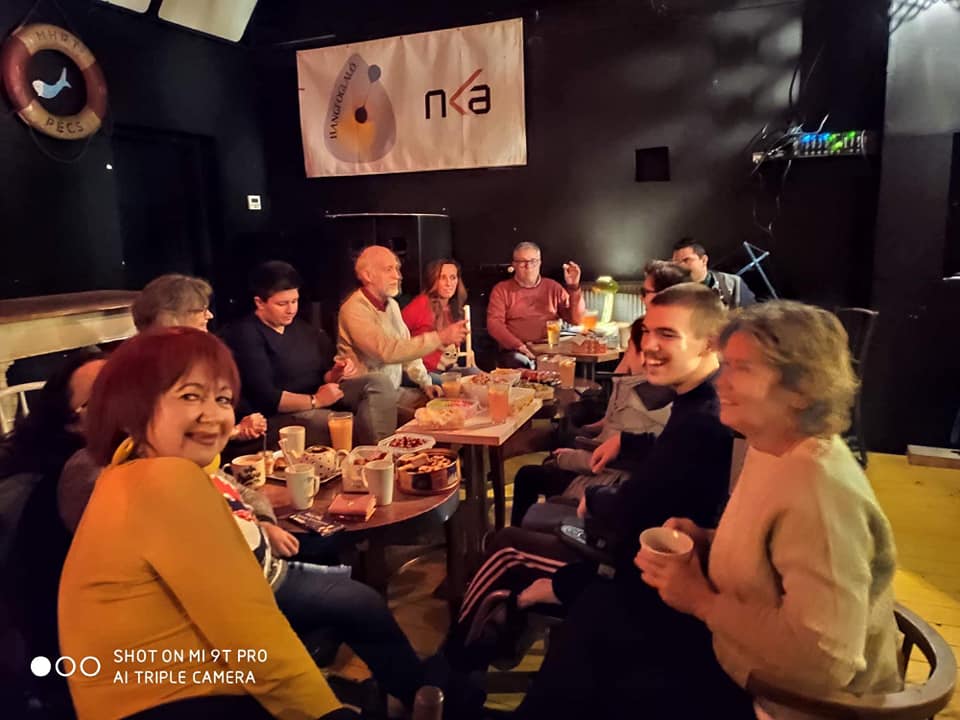
Members of the organising committee from left to right: Tibor Gonda, Zita Füziné Kajdy, Zsuzsa Szabó, Veronika Pataki, Evelin Almádi, sitting in front Gergő Berkes, messing with the camera Zoltán Murányi 🙂

Closing report: “Pécs is livable as a barrier-free city” – STICKER project 1.

Pécs Community Foundation
Pécs’s Future Foundation 2018 

Community Creativity Projects

The Project’s name: “Pécs is livable as a barrier-free city”

Its duration: 22.11.2018 – 31.08.2019

About the project:

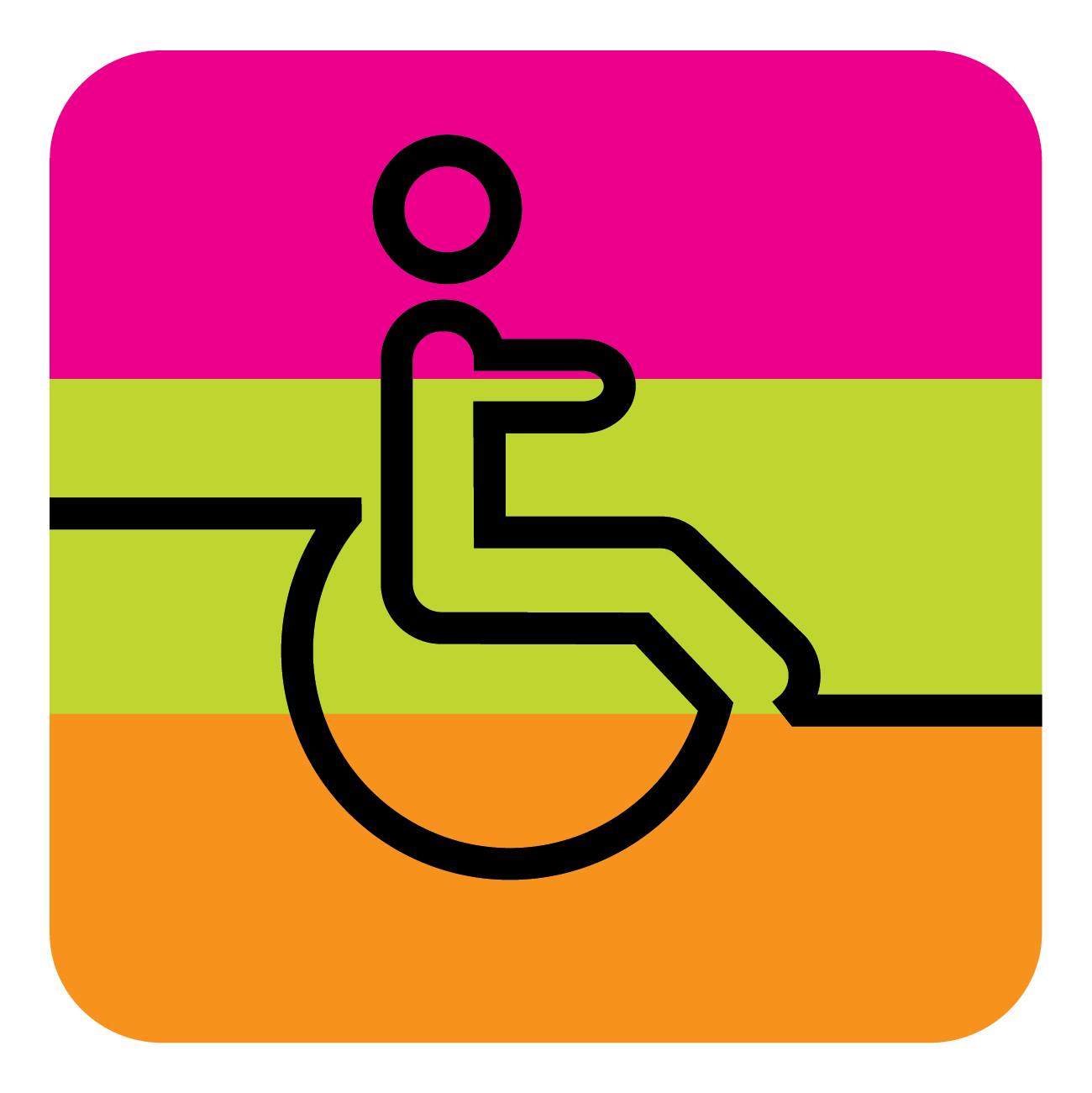
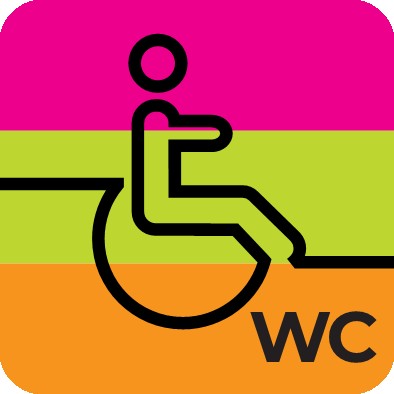
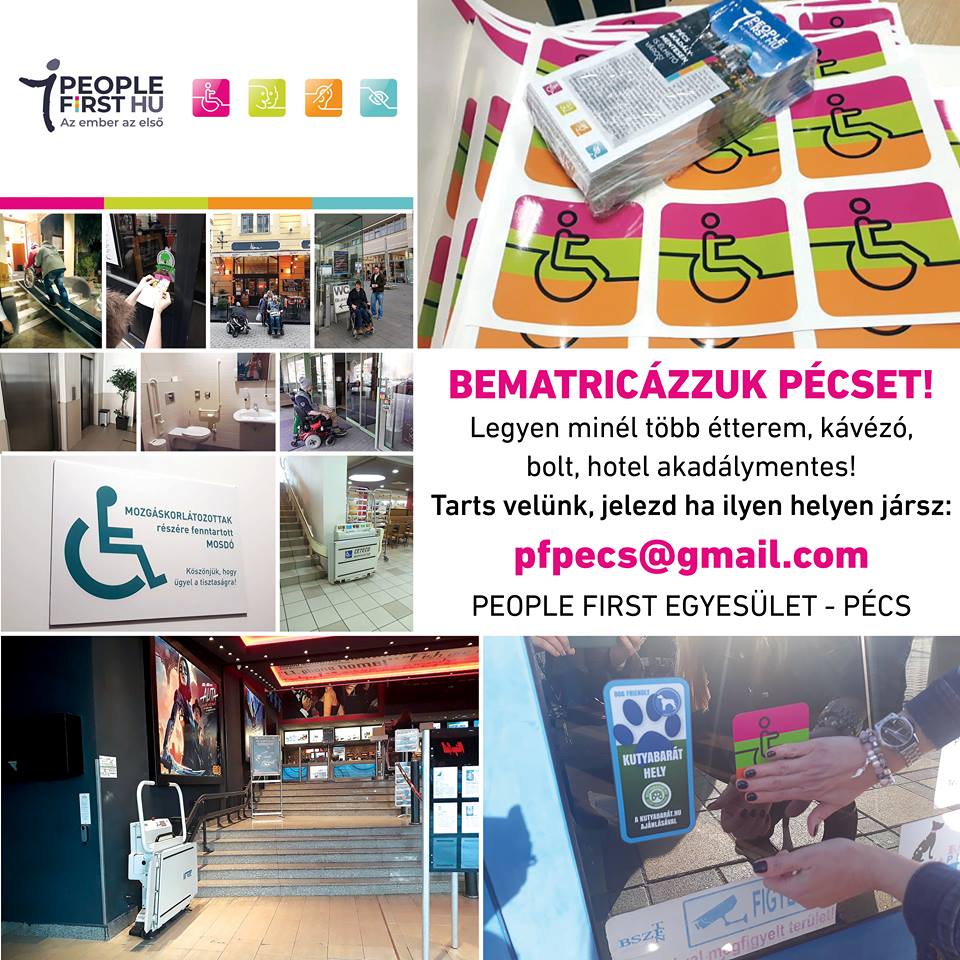
Members of People First Association Pécs have formed teams of two and started  visiting restaurants, cafes, hotels, shops in Pécs to map barrier-free places. If it was barrier-free, with the consent of the owner, preferably with him together  put a sticker – which we designed – on the doors just like Visa or MasterCard. In case the place has a truly barrier-free toilet a WC sign appears in the lower right corner of the sticker as well. If the toilet isn’t barrier-free, the WC sign don’t appear on the sticker.
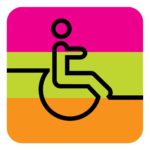
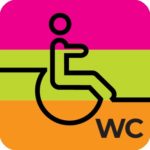
If the establishment is not fully accessible but improving its accessibility is possible and the owners of the establishment are open to it, we supported them with advice regarding the sourcing and installation of ramps, handrails etc., as well as help with official procedures or redesign.

In return the Association does not expect any financial compensation from the restaurants/cafés 

All of this greatly contributes Pécs, as an assessment of barrier-free livable city, it’s also a tourist attractant factor.

Let’s make Pécs barrier free! A barrier free society is not only advantageous to the disabled; young mothers with prams, the elderly, and those with temporary injuries also benefit.

The attitude of the owners was positive, they were happy to help. Where they were not cooperative we didn’t discriminate, only we removed it from the database. Persuading is not our job. But the attitude of the owner, manager and staff is very important, it was also a “barrier-free condition” for us. 

We have posted all times the identified sites with photos on our and additional Facebook sites. We had a lot of likes, comments and shares. https://www.facebook.com/PeopleFirstHun/

We have uploaded the identified sites on the wheelmap.org too, by this introduced the locations of Pécs in an european-level database. We have done this two ways: evaluated the already registered ones, and uploaded the missing ones with self-made photos. https://wheelmap.org/search

We have created a menu item on our website with a category database. We want to do this database more professional in the future. Our website is bilingual, all data and reports are in English and Hungarian – except the blog. http://peoplefirst.hu/akadalymentes-pecs/

Participants, number of the involved people, effects:

The “sticker project” was implemented by a 6 person-team of People First Association. 3 are wheelchair users 1 movements inhibited, 2 able bodied assistance. Many of our members also helped with ideas, with place recommendation, and we got a lot of Facebook comments from the city population.

Our membership is enchanted (8 person) who indicated that specifically in the projects they want to participate. 

All included companies became partner (restaurants, hotels, national organisations), we have built everywhere a linked to one person relationship. These are very useful contacts for us (e.g. Hungarian Post Company, OTP the most important Hungarian bank)

Partners, potential supporters:

Among our members and close cooperating partners was a lively debate many times about the accessibility, suitability of a place, shall we put the sticker on or not, what is the really important aspect….

We have decided that some of the answers from the finding locations are not satisfactory for us. We continue to consult with them and in the last resort we turn to the Equal Treatment Authority

We have a concrete relationship with many useful organizations (Biokom, Decathlon, IT Services, Hungarian Post Company, McDonalds, OTP Bank, hotels, restaurants, Bishop of Pécs, media). There was a case for applying into the project an organization itself (Pécs Plaza). 

The attitude was very positive, we experienced only 2-3 times impassivity. The willingness to change was strong, even when the accessibility was a difficult task (tourist attractions like the Cathedral or the Mosque, or historic building like Almalomb restaurant in Hosszúhetény)

The project expansion was made possible by the support of C.S. Mott american foundation Academy for the Development of Philanthropy in Poland, “Pécs City for wheelchair users – Promoting Inclusion through both Improved Wheelchair Accessibility and Community building activities” project. 

Data

finding locations in Pécs from barrier-free perspective (restaurants/cafes/hotels/shops/public institutions/churches/public toilets): 53

sticker received: 22

not accessible: 14

accessible but corporate marketing reasons sticker placing is not possible (e.g Árkád Pécs, McDonalds, OTP Bank, Hungarian Post): 5

waiting for feedback: 12

As mentioned, in some places we continue to agree, wrote an official letter with the involvement of rehabilitation engineer and lawyer. In case of negative answer we will turn of the Equal Treatment Authority. 

Media appearances:

  • 2019.04.24. print média: Dunántúli Napló “Színes matricával jelzik, ha egy hely akadálymentes” 2. o

<iframe src=”https://www.facebook.com/plugins/post.php?href=https%3A%2F%2Fwww.facebook.com%2FPeopleFirstHun%2Fposts%2F2284803801610271&width=500″ width=”500″ height=”634″ style=”border:none;overflow:hidden” scrolling=”no” frameborder=”0″ allowTransparency=”true” allow=”encrypted-media”></iframe>

  • “Nincs akadály” jegyzet 2.o
  • BAMA online: https://www.bama.hu/kozelet/helyi-kozelet/szines-matricaval-jelzik-ha-egy-hely-akadalymentes-1803352/?fbclid=IwAR0U0hBjJVezhqVrYJZtlbFJnNHz5f-FM0QY10woB7dxH3GhufcIpXfM9N8
  • 2019. május print média:  I Love Pécs Magazin “Pécs akadálymentesen is élhető város!” cikk 33.o

<iframe src=”https://www.facebook.com/plugins/post.php?href=https%3A%2F%2Fwww.facebook.com%2FPeopleFirstHun%2Fposts%2F2300960023327982&width=500″ width=”500″ height=”670″ style=”border:none;overflow:hidden” scrolling=”no” frameborder=”0″ allowTransparency=”true” allow=”encrypted-media”></iframe>

  • Facebook kampány: 2019.04.08. “Tegyél te is az akadálymentes Pécsért”  – bematricázzuk Pécset! 7556 elért ember, 557 aktivitás, 62 like, 13 hozzászólás, 50 megosztás

<iframe src=”https://www.facebook.com/plugins/post.php?href=https%3A%2F%2Fwww.facebook.com%2FPeopleFirstHun%2Fposts%2F2258365727587412&width=500″ width=”500″ height=”750″ style=”border:none;overflow:hidden” scrolling=”no” frameborder=”0″ allowTransparency=”true” allow=”encrypted-media”></iframe>

  • 2019. április print média: I Love Pécs Magazin: “Pécsi Közösségi Alapítvány Fontos lépések az élhetőbb, akadálymentesebb Pécsért!”12.o

<iframe src=”https://www.facebook.com/plugins/post.php?href=https%3A%2F%2Fwww.facebook.com%2FPeopleFirstHun%2Fposts%2F2252085481548770&width=500″ width=”500″ height=”689″ style=”border:none;overflow:hidden” scrolling=”no” frameborder=”0″ allowTransparency=”true” allow=”encrypted-media”></iframe>

Continuation of the project:

We started the project in at the end of the year 2018 and completed it in August of 2019 in the framework of this project.

BUT, we can’t stop the project, because on the one hand, a constant updating requires, on the other hand, the disabled people requires the continuation. This is a entirely niche activity in Pécs, a current database is required. 

We still have many places to discover and new directions will be implemented by the posts, comments of the local residents and interested: churches, tourist attractions, public institutions, cultural institutions, basic public institutions, hiking trails.

We also want to explore how places can be approached: bus lines, accessibility of the buses, accessibility of the bus stops, where to get off the bus, condition of walkways, route planning. 

The already identified sites must also be checked – e.g. the public toilet on the Kossuth square was barrier-free and we got a comment, that it is full of cleaning tools by now. 

We found the opportunity to continue, from September 2019 we keep doing it with a winner application of NFSZK FOF2019 project, now according to the above extensions!  

Further plan to make the project part of city marketing – but to do this, need to create a strong city marketing in Pécs. This could help the prospective Disability Council Pécs for which we are currently working on.

Thank you for the  Pécsi Közösségi Alapítvány/Pécs Community Foundation  to give a push to the

  • project idea and implement a niche activity in Pécs
  • strengthen our membership
  • partners expansion
  • increase our awareness
  •  courage  of new applications

Veronika Pataki Veronika, president

People First Association – Pécs

19.09. 2019.
WHY campaign 10th: WHY are „Quiet Hours” a good thing?

The so called „quiet hours”, better known as Autism Hours is a movement, to provide autism-friendly shopping experience and promotes the acceptance of autistics. There are also more and more autism-friendly events arranged, like concerts, theater performances, movie screenings. Some of the main appeals are dimmed lights, toned down music and audible warnings (if there are any) in order to reduce sensory input, what is quite desirable for the target audience: autistics, their loved ones, their caretakers.

Many autistics have sensory processing differences: our senses have to take in everything, what is visible, audible, touchable, or can be tasted, smelt, without a filter – we are on a concert of senses with the maximum volume on, each and every day. Moreover, there are also a bunch of unexpected events: someome touches you, comes very close to you, seeking or even forcing eyecontact while talking to you, the annoying music is interrupted with messages to the customers or the employees. A baby starts to cry, than another… some terrifyingly loud phones, bells are ringing beside the beeps of scanners, cash registers. At the self-checkout, someone did something incorrectly, so this machine also goes off with beeps, lights, etc…

Did you ever shop like an autistic? Have a try, here is a great visual thanks to the YouTube user „streamofawareness”: 

https://www.youtube.com/watch?v=IcS2VUoe12M    

Horrible quality, isn`t it? The hurricane of sounds, the brittled image… All of this is on purpose: it is a very good simulation of what an autistic person has to endure now and then, for example when shopping. To do the usually easy-peasy grocery round with an overloaded nervous system is actually a very hard job, so we often decide to interrupt our shopping/partaking in an event and we flee on our own or with assistance…

For similar reasons, a walk in a zoo, going to a concert, to watch a movie or to wait in different institutions can give a hard time for us. There are other obstacles autistics and their assistance have to overcome in this noisy, confusing non-autistic world: our behaviours, reactions differ from the usual, the typical and at the same time many misconceptions about autism are out there – this is often generating fear, because of this we, our chaperon might get insulted, even assaulted.

Autism Hours make these events, experiences enjoyable or at least less uncomfortable to autistics, and promotes autism acceptance. We won`t get gawked on when we avoid eyecontact or are wearing hearing protection, tinted glasses, or might behave autipycally, for instance when we are rocking, making sounds, flap our hands. With the help of a properly trained staff, even an overload or a meltdown can be easier to deal with: they can call our chaperon or they can walk us to a safe place.

An interesting side effect of Autism Hours is, that not only autistics are enjoying the concept and the opportunity of a silent event.

Want to know more about autism? Check out these links:

www.facebook.com/autisticnotweird/

http://autisticnotweird.com

https://www.youtube.com/channel/UC9Bk0GbW8xgvTgQlheNG5uw

https://www.autism.org.uk

www.autisticadvocacy.org

Thanks to our association member “Anthea Aspie” for the sensual description!

Closing report: “If there are no barriers, we’re coming too!” ECK project

Our main goal was with the ECK project was to make disabled people an active part of local society. We could reach that with all project elements.
The Barrier-free Tourism Day is increasingly well-known at national level and since 2019 in an international level too. New elements have been added, e.g. presentation of disability sports, involving a new location (sports camp), which have all made significant progress. In the organizing team disabled people are more and more active. The number of volunteers is constantly growing and expanded with new arrivals like students and high school students who are particularly keen to volunteer with us. Volunteers are important element of social sensitizing. 

Exploring barrier-free hiking  trails project element proved to be an excellent community-building activity within the association and the involvement of the local population was also successful in this project element. An unexpected effect was the strong media interest.

We developed a methodology to the Hidden city barrier-free guidance project element, and tried it on 6th of September with serious interest. It was also a great opportunity to build contacts with local populations and actors in tourism. The future continuation of the project element, the inclusion in the permanent tourist offers in Pécs proved to be a greater task than we thought, but the opportunity has arrived at the end of the project. We have also prepared to continue it in our international Peer-AcT Erasmus+ project.

A methodology has been developed also in Barrier-free advice project element. Here we are looking for additional partners, mainly lodgings in Pécs and the area around Pécs.

It was an important goal and impact in the whole project to make Pécs better and more livable.

ECK was the most complex project so far, which required a lot of work but thus brought satisfaction, recognition, external and internal success and brought new tasks. The greatest achievement is the increase in the activity and responsibility of the members.

It is difficult to highlight one as the best moment of the project, but since the best way to achieve the accessibility in our minds  with enjoyable, cheerfully performed sensitisation, the Hidden city barrier-free guidance can be highlighted. We really enjoyed it, and the participants too. It’s a pleasure to show our city, it’s a pleasure to work with good partners. This is part of accessible tourism, which will be of great emphasis in the life of our organization in the future. We have already had serious results, we can boast of many best practices in Hungary and abroad. This is the project element that demonstrated the best the internal professionalism, which draws attention to the fact that people with disabilities are equally people. In this case, they are equally qualified in terms of diploma, language skills, creativity, innovativeness and even humor.

Thank you ECK!

Workshop on participating in accessible tourism

Workshop on participating in accessible tourism

The first multiplication workshop of the international project that focuses on accessible tourism has been recently held for people living with disabilities in Pécs. Participants of the workshop gained insight into the project’s goals, its outcomes, and were informed about the application process for the free training, the knowledge and qualifications they would gain, as well as future employment opportunities in accessible tourism.

The Hungarian partner in the project is Zöld-Aktív Szociális Szövetkezet, co-partner is People First Association. What makes the topic of the workshop special is the fact that accessible tourism is a brand new player in the economy, not only in Hungary, but all over Europe. From an economical point of view, its emergence is inevitable, as people living with disabilities want to participate in the tourism sector both as service users, and as part of the work force. The latter is the main goal of Peer-AcT Erasmus+ international project, which gives the opportunity to people with special needs and disabilities to train as Peer Councillors, with inclusion and equal opportunities in its focus. The methodology is developed by adult educators, prospective trainers living with disabilities, as well as tourism professionals. At the end of the training, combining personal experience and professional knowledge, participants will be able to give advice and provide training in all fields of accessible tourism: transportation, accommodation, gastronomy, leisure activities, guided tours and city planning. In the future, they will work as trainers and consultants both in the tourism industry, and for decision-making bodies.

Participating partners in the project are Germany, Italy, Spain, Croatia and Hungary. Duration of project: 01.11.2018.- 30.04.2021.

The Hungarian partner is in charge of developing the methodology, i.e., how peer-mentoring is organised in the field of accessible tourism. As a part of this task, we have carried out a survey in 5 countries. With the professional leadership of the Department of Marketing and Tourism, University of Pécs, we are carrying out an in-depth analysis of the potentials of accessible tourism.  Members of People First Association, a partner of Zöld-Aktív Szociális Szövetkezet, are actively helping the project with their expertise and personal experience; they participate in developing the  peer-mentor training, and pilot trainings for service providers in the tourist industry.  Members of the association are the prospective trainers.

In the near future, we are going to organise a similar workshop for tourism service providers. 

For more on the project: http://peeract.eu/

and in the “Projects” menu on this website.

WHY campaign 9th: WHY can assistance dogs go EVERYWHERE?

Did you know, that assistance dogs can diverse, they not only guide visually impaired people? They can also help for mobility-impaired in everyday life, indicate sound for hearing impaired, indicate epileptic or other seizures, but it exist personal assistant dog to help in independent living, and therapy dog who is involved in pedagogical or psychiatric rehabilitation. You need to know that not only the dogs, but also their owners have undergone a hard training and even taken an exam.

The owners of these intelligent dogs can enter anywhere with them lawfully. Yes, anywhere. Although some workers of institutions or even disabled people don’t know exactly the relevant legislation. Most of the false complains or even relegations come from catering units, shops, playgrounds or markets. In these cases they either don’t let the disabled person go in with his dog – but he can’t get by without him- or they make him put a muzzle on the dog. As the above list shows, this way the dog wouldn’t be able to help his owner.  How could he warn the owner about danger if it can’t bark? How could he bring it’s owner an important device if it can’t open it’s mouth? 

And it’s something like again that isn’t a potential, a possibility, it is a must to be provided. The Hungarian Equal Rights Authority takes these offenses as discrimination complaints and begins the administrative procedure against the institution, the operator. 

The law enumerates examples of places where people can bring their assistance dogs (e.g. public transport, shops, supermarkets, catering units, malls, markets, accommodations, playgrounds, public institutions, child institutions.) However, people with disabilities can also enter ALL THE OTHER PLACES with his guide dog which aren’t mentioned in the law. He DOESN’T HAVE TO PUT A MUZZLE on the dog, but he needs to show a distinctive sign on the dog and also the logo of the dog’s training organization. The assistance dog can only be banned from the area if it is endangering others physical safety. Although let’s just say it, this would be very rare in the case of a trained guide dog. 

It’s important to know that the assistance dog is working with it’s owner so however cute or pretty it is it cannot be petted and we shouldn’t take it as an insult if the owner doesn’t let it either.  If we did, we would distract the dog and endanger the safety of the disabled owner. The case is the same when it comes to giving food to the dog. It can only be fed by it’s owner, therefore don’t offer food don’t tempt him. 

Relevant Hungarian legislation:

A segítő kutyák gazdáinak jogait és kötelezettségeit a fogyatékos személyek jogairól és esélyegyenlőségük biztosításáról szóló 1998. évi XXVI. törvény. 

A segítő kutya kiképzésének, vizsgáztatásának és alkalmazhatóságának szabályairól szóló 27/2009. (XII. 3.) SZMM rendelet 

Written by Veronika Pataki. Thanks to Evelin Almádi for your additional thoughts!

General meeting: what’s coming in 2020?

We held a general meeting yesterday to evaluate the year 2019 and start 2020.

Great ideas and plan have been made. It is good to see that more and more members are actively and enthusiastically involved in our local, national and international programmes.

We have new members, who hope to have the same fun as we.

We continue believe that we are stronger together, so we work with other NGOs as much as possible. Follow us here or on our website http://peoplefirst.hu/, or in Instagram: peoplefirstpecs in English too.

We promise it will always be exciting what we do! 

Guidance training in accessible tourism

Guidance training was given us today in the framework of our ECK project by two experts of Tourinform Office Pécs to be even better in accessible tourism.  We would like to develop our “Hidden city barrier-free dowtown guidance” project as a city thematic tour, in co-operation with the city’s tourism actors. Just follow us and you will see the outcomes!


Together In Partnership! A summary of 2019

This time last year we promised that we would be even more active and cohesive, and that, within the limits of our possibilities, we would strengthen the cooperation between local civil organisations. We feel we have succeeded. We have new members, new partners, new projects, and took part in every meeting and event that we possibly could. More and more of our members take an active role in the life of our association, they contribute with their ideas, opinions, write blogs, organise and take part in public events, work in team projects, travel abroad, attend trainings, strengthening and shaping our community.

The events of 2109 in a nutshell:

We wrote lots and lots of grant applications, some of which have won. Our activities have been organised around two main projects:  Strengthening Civil Organisations 2019 – SCO/ECK (http://peoplefirst.hu/en/projects/erosodo-civil-kozossegek-eck-2019/).  As part of this project we have been exploring and assessing accessible hiking trails, and were co-organisers of the 3rd Barrier-free Tourism Day. As well as that, we have developed the methodology for barrier-free architectural consultations and have advised local tourist service providers. In cooperation with our partners in the tourism industry, we created a barrier-free tour of the city of Pécs, entitled ‘Hidden City’. Our project team members received remuneration for the work they did.

In November we participated in another successful SCO grant application, as a result the 4th Barrier-free tourism Day will take place in September 2020.

Our other main activity is our ‘sticker’ project, which we have won in collaboration with Pécs Community Foundation. This project has raised more awareness to our work within the community (http://peoplefirst.hu/en/projects/pecs-jovoje-alap-2018-kozossegi-kreativitas-projektek/).  This project involves the gap-filling activity of exploring barrier-free tourist attractions of Pécs. Our members visit various places, every single place visited is evaluated, and categorised based on its accessibility. Accessible places are awarded a sticker, designed by our members, which is then placed on the entrance door. Finally each place is then entered into a database on our website, with photos and a written evaluation. The database is available to the public both in Hungarian and English (http://peoplefirst.hu/en/akadalymentes-pecs/). Our project team members did this work, which is of invaluable importance, for a very modest payment.

In August we won another NFSZK FOF2019 grant, which means we can continue our sticker project, adding new criteria to the assessment.  (http://peoplefirst.hu/projects/nfszk-fof2019-matricas-projekt-2/ )  

Cooperating with and sensitising younger generations, especially those in secondary school, is very important to us. We have been successfully working together with the students of two secondary schools who are doing their community service. Secondary school students can continue to do their community service with our association.

According to the goals of the Local Action Program for Equal Opportunities we have joined forces with other civil organisations to establish an NGO network that would help the work of the local government. We attended and co-organised workshops. Setting up a disability committee is still a priority for us.

Instances of civil cooperation: we had several discussions at the regular afternoon meetings organised by Kerek Világ Alapítvány, in May we attended an open day for civil organisations (Nyitott Udvarok Napja), in June we attended a workshop organised by Civil Közösségek Háza on national and international good practice, as well as workshops on accessibility with the participation of local service providers. We are building a relationship with Kilátás Alapítvány, with the hope of future collaboration in the area of purchase of equipment. We took part in Szomszédság Akadémia, and have given a talk on social campaigns. Last but not least we are working together with Budapest NGOs to establish independent and assisted living.

Our international relations have broadened as well. We have been participating in international projects, have travelled, studied and worked abroad. We organised workshops for people living with disabilities on how to set up a business as a part of an Erasmus+ project, establishing FairShares social enterprise model in Hungary. Its final conference held in English, in Pécs was well attended. In March we developed a sensitising game in cooperation with our German partner, VSBI in Pécs, which we followed up by testing it in 5 German towns, with the help of our members. The goal of Peer AcT Erasmus+ project is to train peer mentors in accessible tourism. In May we attended an international conference in Osijek, and in November two of our members participated in Germany in a week-long training run in English. The training will be repeated in Hungary in early 2020, to pass on the knowledge to five other association members.

Realising the power of social campaigns we have started a number of them and participated in many others both nationally and internationally. Just to name a few of these:

In April we started the ‘Why’ campaign in which we explain briefly why certain things in the world of people living with disabilities are the way they are. Why, for example, disabled parking spaces are so much wider than regular ones; what the tactile guide stripes for the visually impaired mean etc.. To read about the campaign click on ‘Why’ on our homepage (http://peoplefirst.hu/en/miert/). 

In the international campaign InKLOsiv, we showed accessible toilets in Pécs.

In June, People First joined TASZ as a supporting organisation in their campaign for independent living and personal assistance, entitled ‘A Day off for Every Family’.

In October, within the framework of a campaign organised by ‘Lépjünk, hogy léphessenek Alapítvány’ we organised an open forum with the mayoral candidates, where our members talked about their experiences with support services in Pécs and studying at university; women raising children with disabilities; and everyday life in nursing homes.

Our website has a new menu entitled ‘Barrier-Free Pécs’, where barrier-free locations in Pécs can be searched for in various ways. This menu is both for locals who would like to plan their shopping, run errands or just go for a walk, and for tourists planning to visit Pécs. The menu is also available in Hungarian and English.

All the while we had lots of fun spending time together hiking, drinking coffee, exchanging ideas, discussing, convincing each other, visiting concerts, festivals and conferences, playing sports, working…

On 25th December we closed the year with a very cheerful Christmas party where – as always – we welcomed friends and people from Pécs.

To be continued in 2020.

Join us! Follow us!

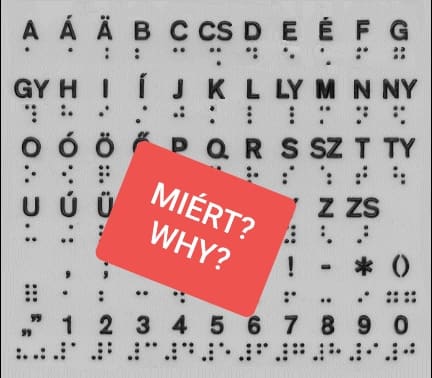
WHY campaign 8th: WHY has Braille writing still a reason to exist?

Many people know about Braille writing, that it is a writing system consisting of point combinations, and it can be read by touch by visually impaired people. It was developed by Louis Braille, based on 6 points just like the dice.

But it is probably not known that there are separate Braille alphabets for German, English etc.. You probably didn’t know either, that we can display not just letters, but numbers and symbols used in maths, physics, and chemistry, IT signs, sheet music etc.

It is also interesting, that we distinguish full writing, where each braille letter is displayed, and brief writing, where we write the text in abbreviated form.

It is clear, that such a smart system is modern and relevant even in the XXI. century. Braille writing is not only a paper based system but Braille is also available on computers, smart phones, etc..  Braille display is still available if the phone or laptop is not there, or if the battery is flat.

It is also important, that the tactile writing system is the only possibility for blind or visually impaired people to experience INDEPENDENT reading, which is in no way equal to a text read by a speech synthesizer or by another person.

Source: https://jovokilatasai.mvgyosz.hu/

Written by Veronika Pataki