Category Archives: News

From barriers to solutions – a highly successful conclusion to the joint project of the University of Pécs and People First

The People First Public Benefit Association has been running its nationally unique Accessible Pécs Database since 2018, showcasing genuinely accessible locations based on the personal experiences of experts with disabilities. Alongside the accessibility assessments it has been carrying out for years, the association now aims to involve the residents of Pécs and encourage them to take action. The first step was a joint project engaging students and staff of the University of Pécs.

As part of the Pécs City Civil Fund 2025 project, supported by the Municipality of the City of Pécs, the People First Public Benefit Association and the University of Pécs jointly called on university students and staff to take action. The aim of the initiative was to ensure that accessibility would not be seen solely as an institutional responsibility, but would become a shared cause, in which the people who use these spaces every day actively participate in shaping them. Participants identified barriers in university buildings, dormitories and the public spaces leading to them, documenting their findings with photographs and descriptions. An important requirement was that they should not simply report problems, but also propose solutions. In this way, the programme also strengthened self-advocacy, community responsibility and active civic participation: we should not just notice barriers, but take action to remove them.

The call resulted in a total of 53 relevant, assessable proposals from across all faculties of the University of Pécs. Even the organisers were surprised by the diversity and thoroughness of the submissions.

Some students systematically went through university buildings and produced detailed photographic documentation of the barriers they encountered. Others looked beyond the university itself and included locations around the city frequently visited by students. In one case, a vice-dean assessed the accessibility of their own faculty, while an enthusiastic team of staff members developed their own methodology and systematically collected problems and possible solutions within their faculty over a period of three months.

The proposals included assessments of the accessibility of a university ATM and a lift, as well as an idea to develop a map in Braille to help students and staff with visual impairments find their way around.

One of the most important outcomes of the project was precisely this change in mindset: participants no longer viewed accessibility as outsiders, but became active contributors to shaping their own environment.

The project’s innovative community-based approach could serve as a good practice for other cities and higher education institutions to follow. Pécs can once again set an example of how civil society expertise, institutional commitment and active public participation can be brought together to create a more inclusive environment.

The close partnership established between the University of Pécs and People First will not end with the conclusion of the project. Their shared goal is for the University of Pécs to become one of the most accessible higher education institutions in Hungary over time, and for the cooperation developed here to serve as an example for others to follow.

We consider it important to highlight what we stated at the end of our professional report to the Municipality of Pécs, which funded the project:

We would like to highlight the value of this project as a model and its adaptability to other civil society–university initiatives. As the project is also significant for Pécs’s city marketing and development towards greater accessibility, we ask the city to share information about it through its own communication channels.

We also ask for wider promotion of the Accessible Pécs Database. This nationally unique initiative, which the People First Public Benefit Association has been running in Pécs since 2018, could deservedly be one of the city’s sources of pride. We would be very pleased if the city leadership paid greater attention to this exemplary work than it currently does, and gave greater prominence to its value and significance in the city’s own communications.
The opinions of those affected matter most

We asked those directly involved in the CODE project for their opinions again.
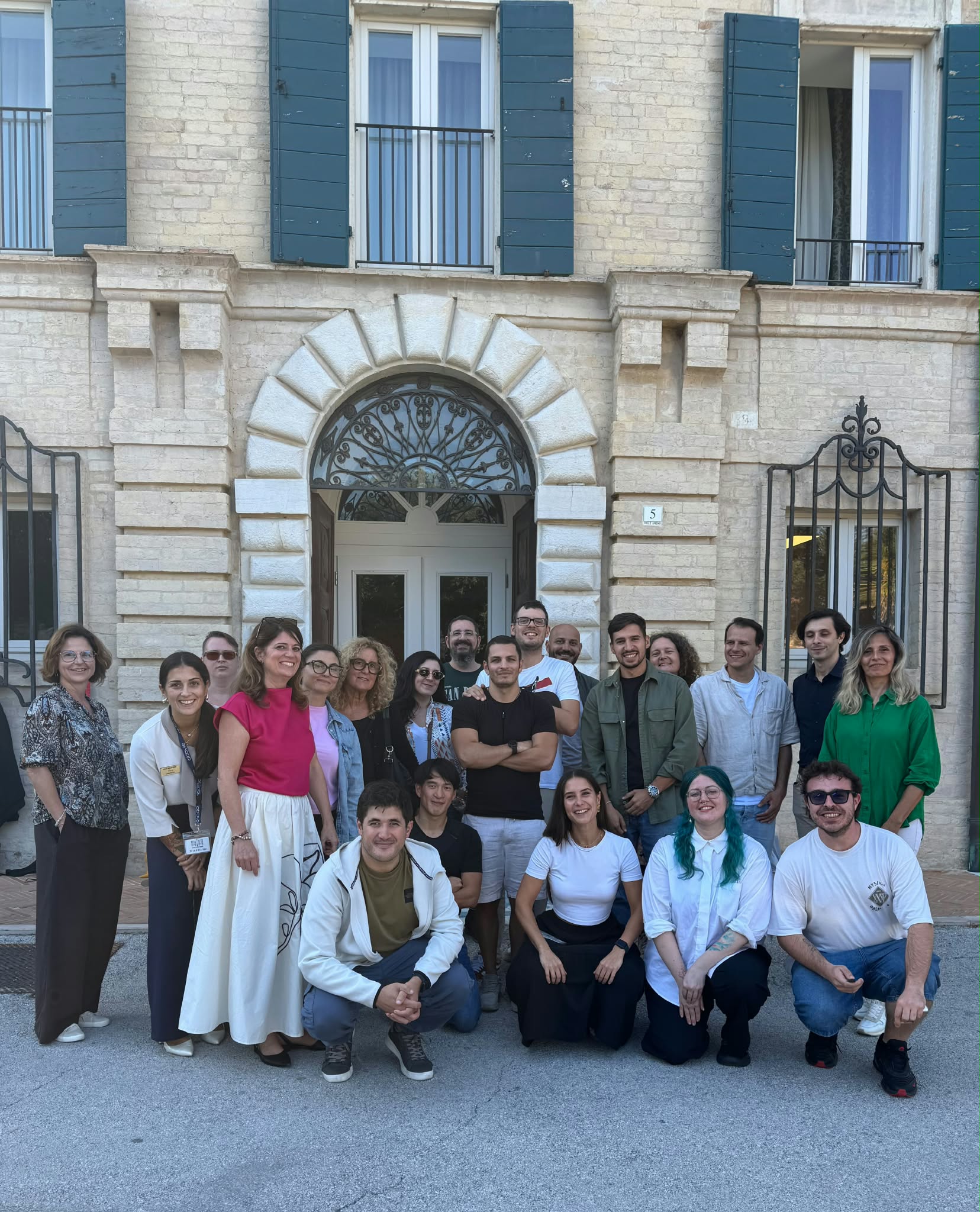
At the end of September people with disabilities, financial professionals and company representatives took part in an intensive three-day training course in Italy, where they tested the results of the project, which is now nearing completion. They shared their valuable opinions and suggestions and talked about their experiences of inclusion.

However, the event was not just about presenting the project’s results. The most valuable part was the discussions we had together. Financial professionals, company representatives, project partners and people with disabilities had the opportunity to share their ideas, experiences and feedback on how to make financial services and workplaces more accessible and inclusive.

We are working with a broad range of partners on this project, bringing together an equally wide range of expertise and experience. The real strength of projects like this lies in the ideas, questions and experiences of the participants.

Take a look at the CODE project website, which focuses on raising awareness of financial inclusion and accessibility.

FairCare has arrived in Pécs/Hungary

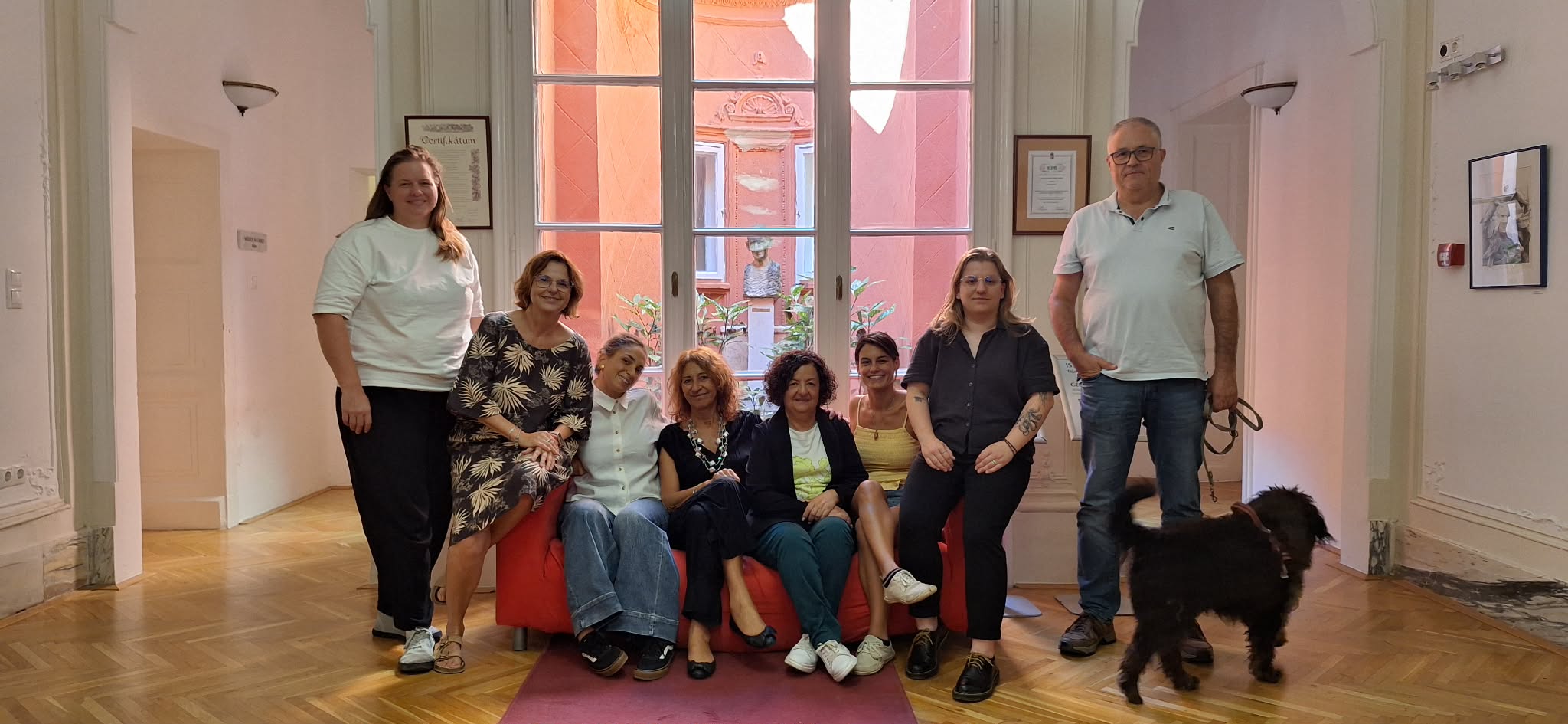
On 16–17 September 2026, we held two intensive days of discussions with our German, Italian, Spanish, Cypriot and Irish project coordinator partners, reviewing the results achieved so far in the FairCare international project. And we worked with even more intensive work on the remaining chapters of the valuable project outputs. This time, the host was the People First Association in Pécs/Hungary.

In the project working on the development of long-term care, the broad and active involvement of the target groups is very important to us. Therefore, we placed the main emphasis on the peer training implemented so far, the cooperation training coming soon, and the community training.
The common goal of all of them is to develop the effective cooperation and self-advocacy of all actors involved in long-term care.

Since Pécs is a beautiful city, and we are proud of it, we also made time for a little sightseeing, gastronomy, discovering Hungary’s first university, and admiring the panorama from the tower of the City Hall.

We are looking ahead to an exciting period, in which we continue to count very much on you, especially those who live in or work in long-term care, or are involved in it as a supporter/family member!
More about the FairCare project in any of the project languages here: FairCare Erasmus+ international project

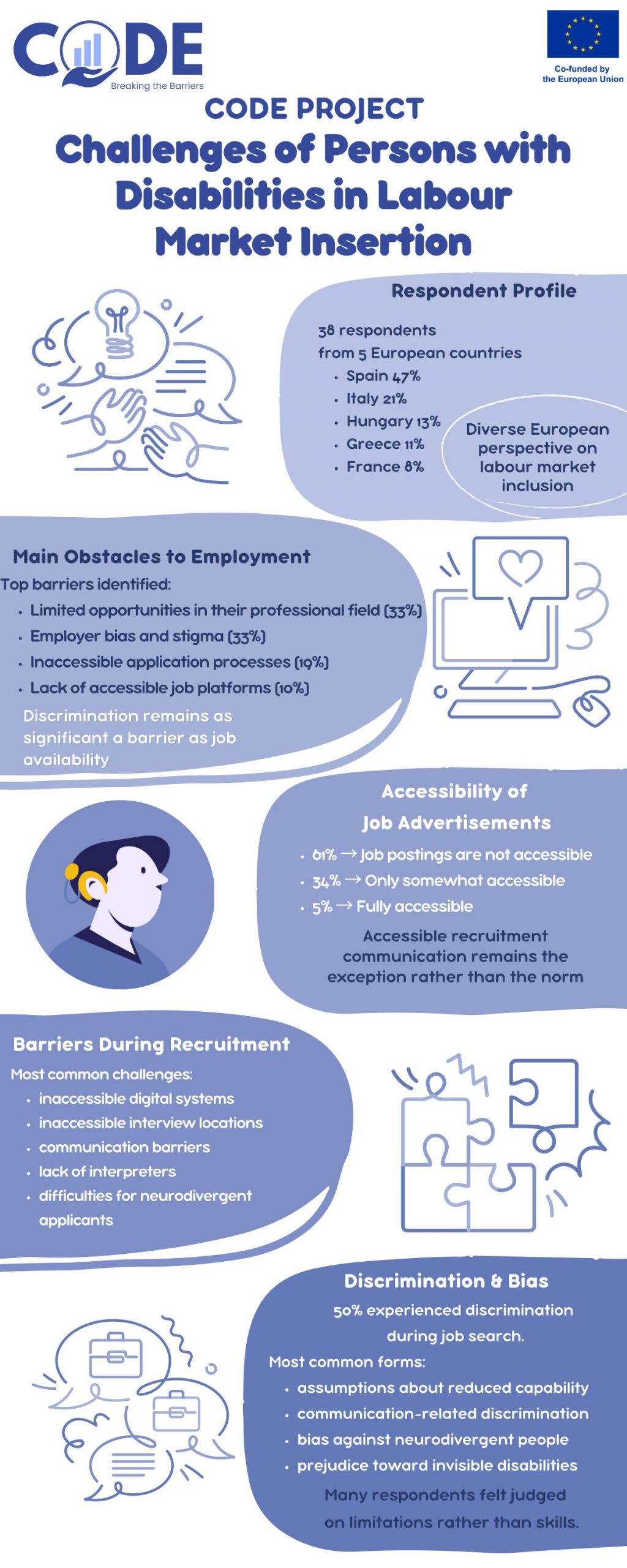
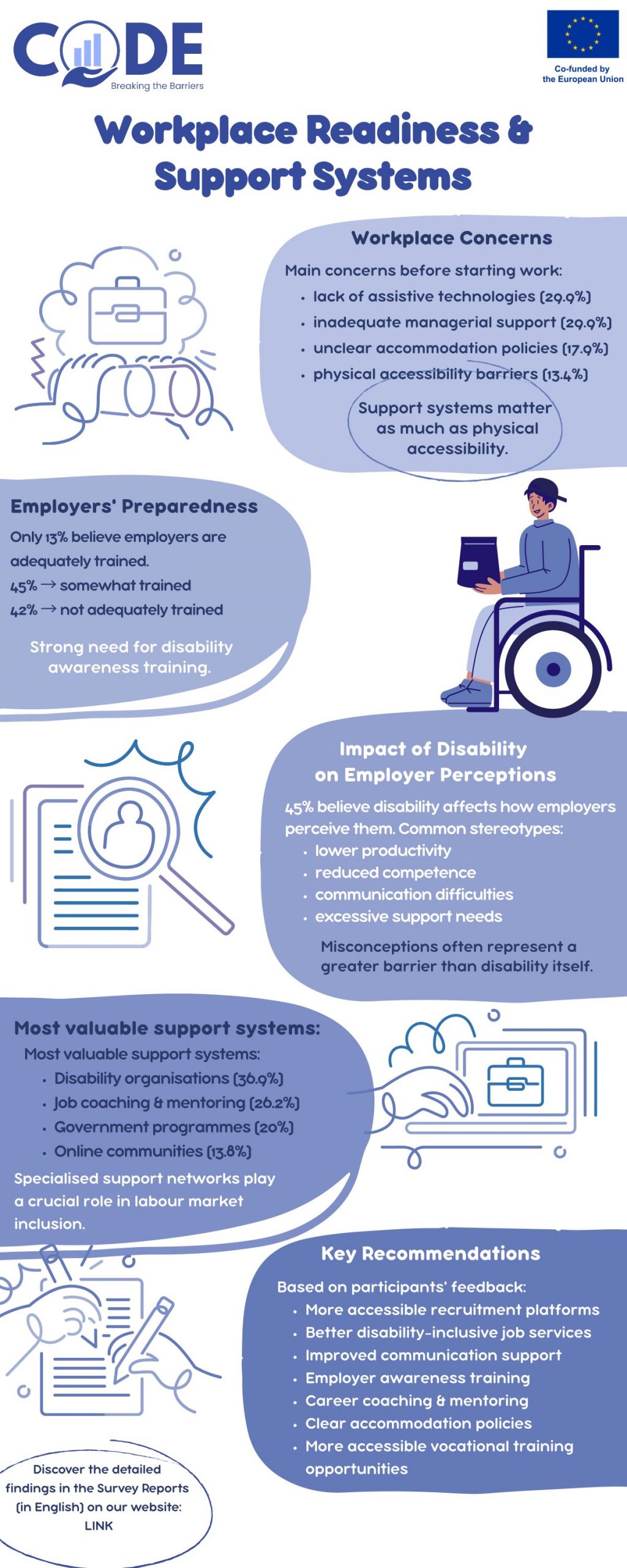
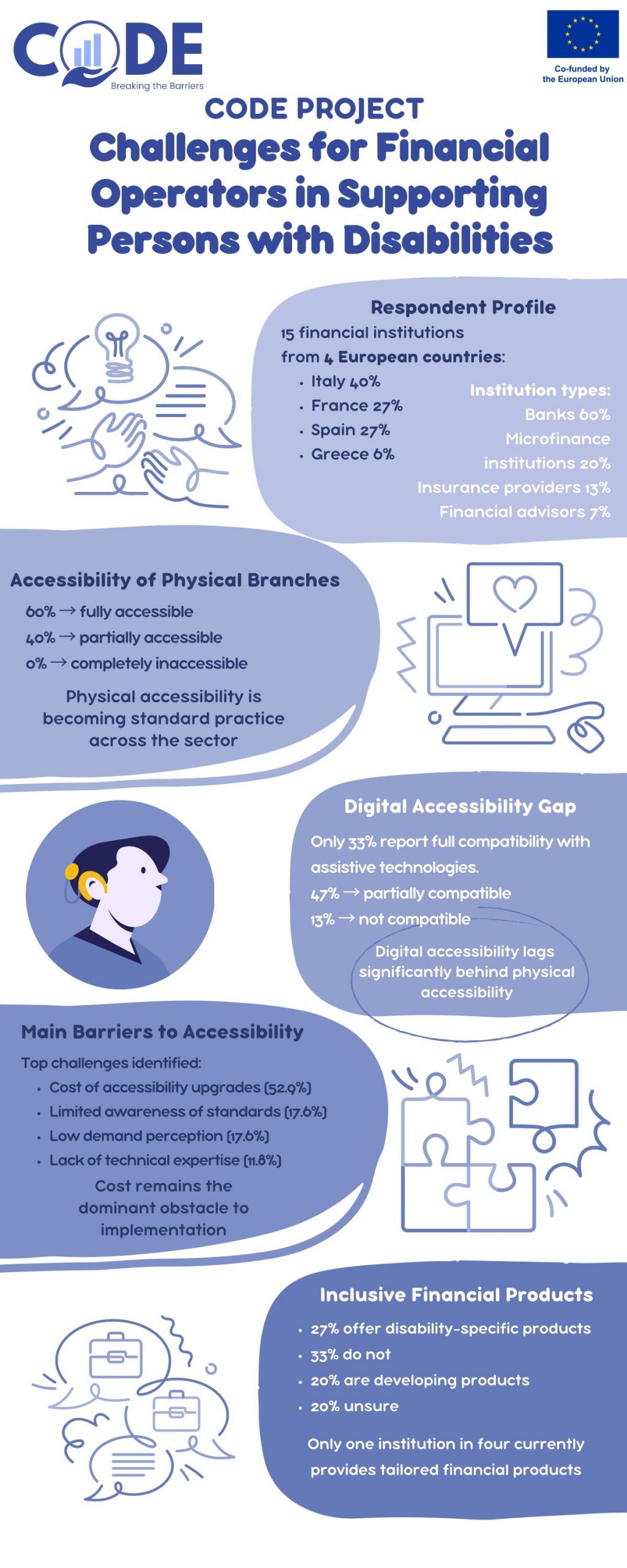
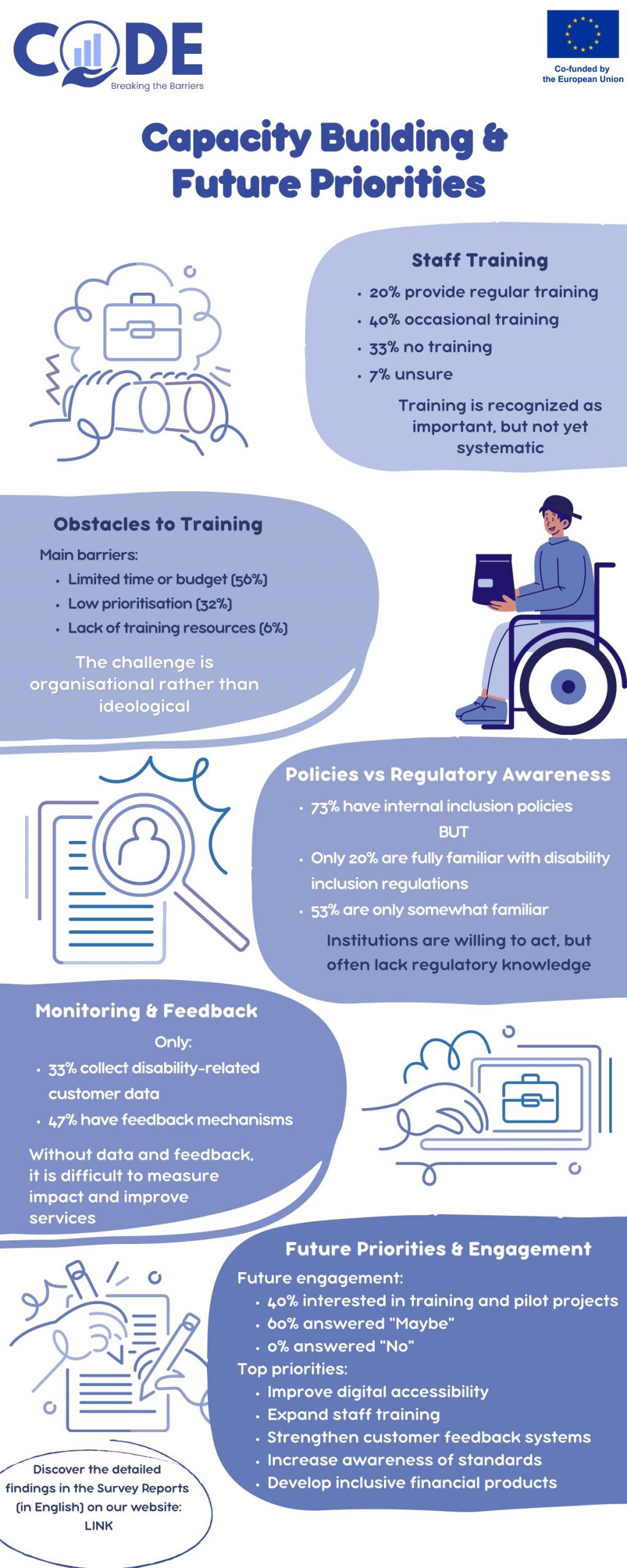
Results: how do people with disabilities, financial organisations and companies see the financial challenges?

Within our international CODE project, we asked the target groups what challenges they face in the area of financial services and social inclusion. The international team collected numerous responses from financial users with disabilities, representatives of the financial sector, and various companies.

The infographics created from these responses can be considered a very significant result, and we therefore highly recommend them to everyone. They provide important insights and point towards future development opportunities for all three target groups.

The experiences of people with disabilities were as follows:

PDF: CODE Challenges for Persons with Disabilities


The challenges faced by financial service providers:

PDF: CODE Challenges for Financial Operators

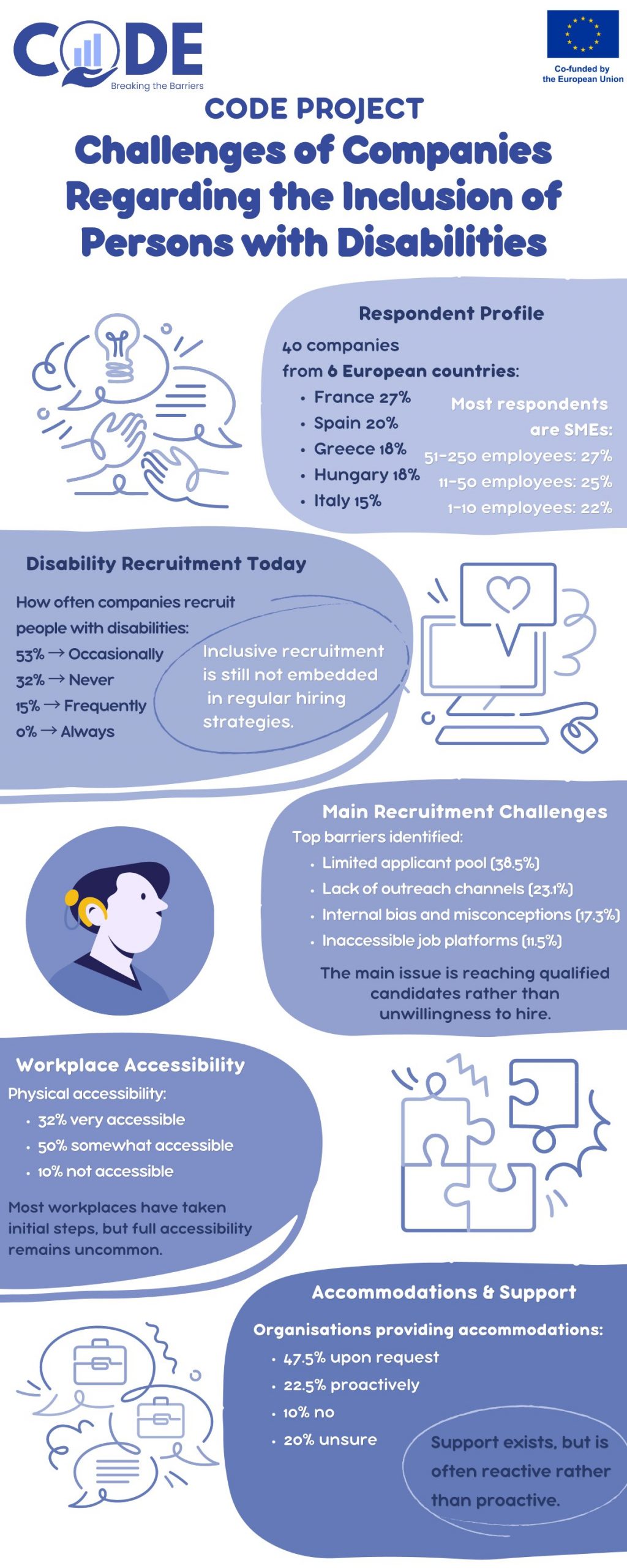
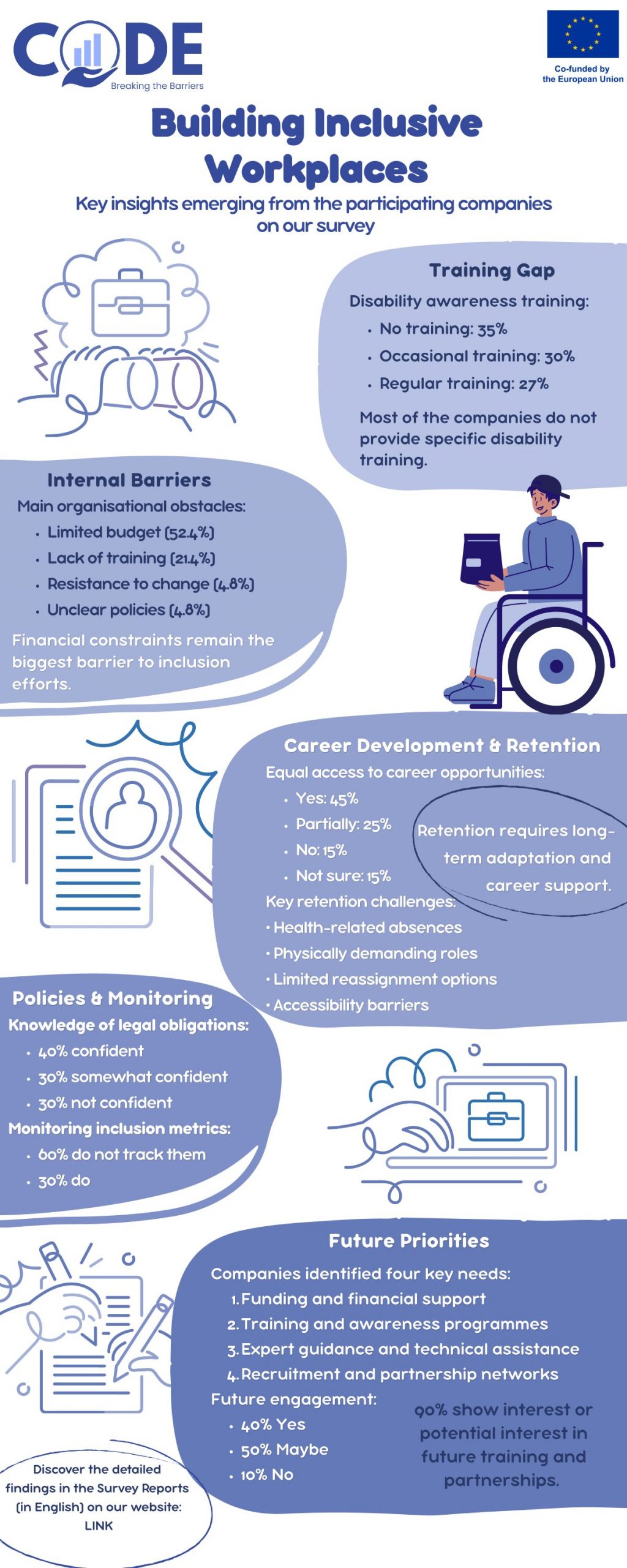
The challenges faced by companies in this area:

PDF: CODE Challenges of Companies

We trained peer trainers in long-term care

The central element of our FairCare international project was the development of two excellent training materials: one for caregivers working in long-term care (family members and institutional workers), and one for care recipients. Our target group is broad, primarily people with disabilities and older people, but also all disadvantaged groups who receive long-term care.

The topics and structure of the training material were developed by Advisory Groups established in the partner countries, including Hungary. In the Hungarian Advisory Group, caregivers and care recipients from different parts of the country work together. We have a great, very active team that shares fantastic insights and ideas!

We have reached the point where we would like caregivers and care recipients themselves to pass on their own experiential knowledge. After all, they are the best experts and the most knowledgeable people in their own fields! Therefore, we organise peer training in every partner country. In Hungary, this training took place on 1–2 August 2026, during a hot weekend. Caregivers and care recipients from distant parts of the country participated in the online event. They received a Certificate for completing the training.

The fundamental aim of the FairCare project is for all actors involved in long-term care to cooperate, and to get to know each other’s approaches, attitudes and ways of thinking. This creates fair and truly effective care and cooperation between caregivers and care recipients. This cooperation is needed now in the care of people with disabilities and older people! And in all forms of long-term care where care recipients and caregivers are present, whether in families or institutions.

Our current peer advisors/trainers can also start meaningful conversations with caregivers and care recipients from other countries through a simple and special tool, the FairCare Discord channel. They can share ideas and solutions – and even English language skills are not required for this.

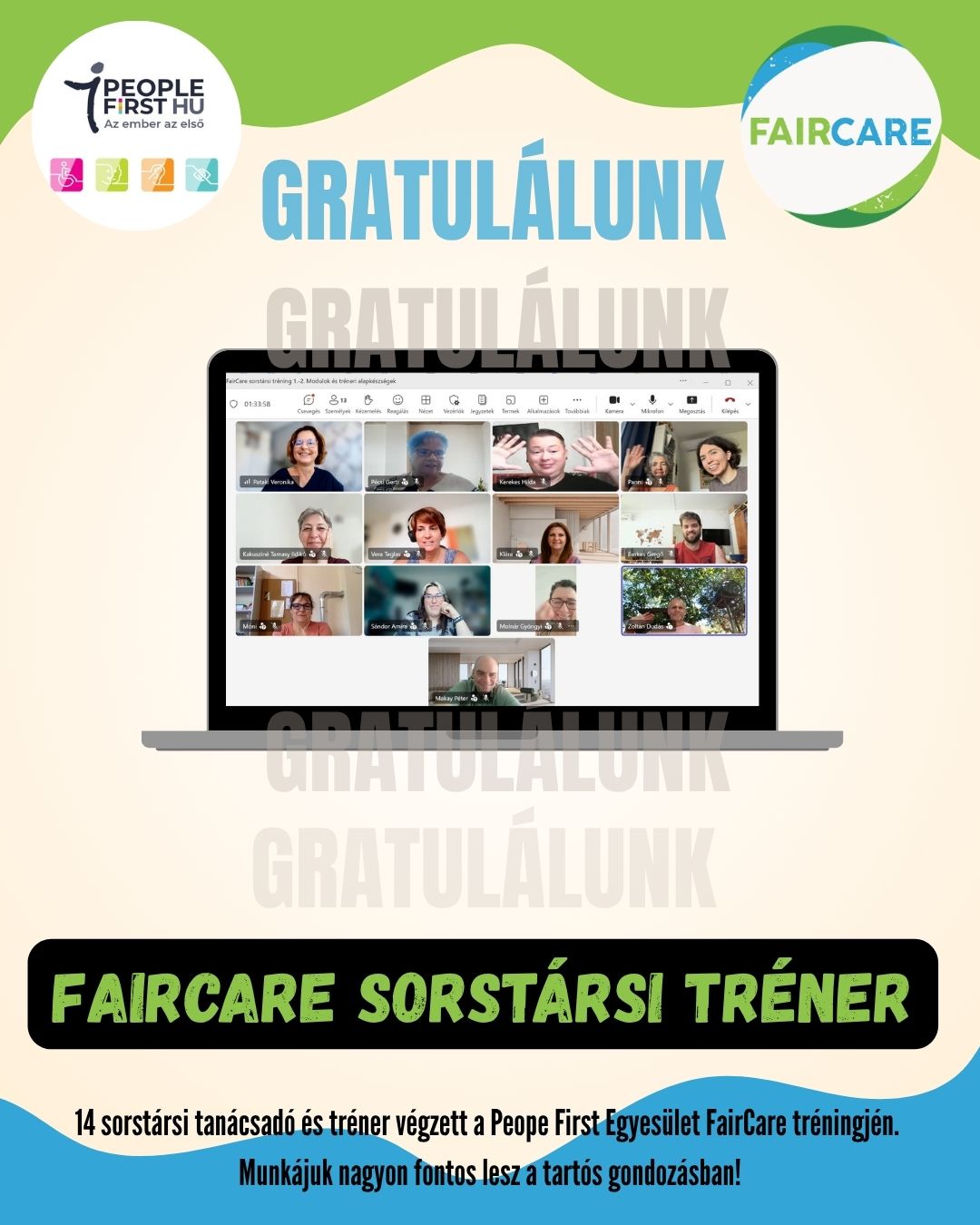
Very important work awaits our participants who became FairCare peer trainers this weekend! We sincerely congratulate them on the successful training and thank them very much for the wonderful atmosphere that made the training truly effective and successful! In the near future, you will also be able to meet them in your own communities, and soon at a FairCare cooperation training as well.

Follow us on the FairCare website: https://faircarecoop.com/

And join the FairCare open Facebook group: https://www.facebook.com/groups/523950267376170

News from the world of the financial sector for persons with disabilities!

Moreover, in our international CODE project, we already have not only news but also significant results!

  • Try it out and manage your finances with the CODE Wallet, available for download on Android mobile devices!
  • Start your journey towards financial independence with our inclusive, multilingual training platform (also available in English)!

Read all about it in the latest Newsletter of our CODE project, where you will also find links to the above-mentioned resources.
Click here for the PDF: EN_CODE_Newsletter_7_July_2026

General Assembly 2025 – with a new approach

An exciting accessible guided museum tour, the annual report, brainstorming about the future, the awarding of certificates of appreciation to our two most active members this year, a travel report: what life is like on a cruise ship while using a wheelchair, and lots of laughter… all of this was part of this year’s General Assembly.
We felt that we had had enough of sitting through dry annual reports, so we decided that this  event should also be cheerful, interesting and innovative.

A bit more formal version: the 2025 General Assembly approved the Executive Board’s professional report for the second half of 2025 and the first half of 2026, as well as the financial report for 2025.
The membership received detailed information both in writing and verbally regarding the activities carried out during this period, which were further enriched by questions, comments, and excellent ideas from the members.

In 2023, the Executive Board decided that the work of active members should from then on be acknowledged not only verbally, but also in a tangible form. Therefore, in connection with the European Independent Living Day on 5 May, we present certificates of appreciation to our active members of the respective year, as well as to our cooperating partners. Since 2024, we have been awarding two certificates each year.
This year, we would like to express our gratitude to our members Katalin Stier and Krisztina Koltai for their committed, heartfelt work for the community and for the disability sector.
Among our partners, this year certificates were awarded to Biokom Nonprofit Ltd. and the Janus Pannonius Museum. Both organisations do a great deal for the development of the human rights of the local disability community, and we are also very grateful for their support in building partnerships.

Before and after this, however, we devoted ourselves to enjoyment, laughter, and gaining knowledge. At the Janus Pannonius Museum Visitor Centre, Ildikó Hoffmanné Toldi gave our members a fantastically engaging and accessible guided tour.

We then held our Annual General Assembly in a wonderful hall of the museum, together with wonderful people. This was followed by an exciting travel experience presentation by Zoli Borsodi, sharing surprising experiences from life on a cruise ship.

We would like to express our sincere gratitude to the staff of the Janus Pannonius Museum Visitor Centre for the opportunity, their kindness, and the fantastic guided tour.
(Here comes a bit of promotion: the Janus Pannonius Museum offers special guided tours throughout the year, so don’t miss it! Admission is free for people with disabilities, and one accompanying person is also admitted free of charge.)

We have connected Europe in inclusive care!

A key milestone of our FairCare project was the midterm conference held in Cyprus, which brought together project partners, formal and informal carers, people in need of care, professionals, and community representatives from across Europe, both in person and online.

The event created a real opportunity for connection, dialogue, and exchange of experiences, while also drawing attention to the growing importance of fair and inclusive care practices in Europe.

At the same time, we are making great progress in this international project aimed at improving long-term care:

  • the peer training programme has been completed, which supports the empowerment of informal and formal carers as well as people in need of care, and prepares participants to become trainers within the FairCare framework.

  • at the same time, a special and engaging new way of connecting carers, care recipients, and professionals has been launched: through the Discord channels, our goal is not only for you to learn what FairCare is about, but also to become part of it. After all, the essence and innovation of FairCare lies in connecting everyone involved in long-term care!
    It is definitely worth reading more about everything in detail in our latest newsletter: ENG_Faircare_Newsletter_4

CODE: News on Financial awareness development

Making banking services accessible and developing the financial awareness of people living with disabilities is close to our hearts.
This is why we are working together with numerous partners in our international CODE project.
April 2026 was an important milestone, because in the project, which is slowly approaching its end, the project results are now being completed.
You can read about this in our latest CODE Newsletter, both in Hungarian and in English.
The short Newsletter is available in PDF format at the end of the post.

If you feel like it, please test one of our project developments, an Android mobile application, which also aims to promote financial awareness through its features and functions that help users to:
– you can track your income and expenses,
– you can organize your finances,
– you can receive useful advice to make everyday life easier.

You can download CODE Wallet to your Android phone from the Play Store. If by any chance you cannot find it this way, use this link: CODE Wallet app

Your experiences matter a lot!
If you have tried the app, PLEASE FILL IN THE SHORT EVALUATION QUESTIONNAIRE – this is how we can find out how, in your opinion, this gap-filling tool could be made even better.
Link to the questionnaire: https://forms.gle/bWfSokSSNraH7K8b7

NEWSLETTER about the progress of the project:
EN_CODE_Newsletter6_April 2026

Building a self-determined life in long-term care

A rarely mentioned topic, perhaps not by chance, as it is almost completely missing from long-term care. Both from the care of people with disabilities and of older people.
THIS IS WHAT WE NEED TO CHANGE!
One of the tools for this is our FairCare project, implemented through international cooperation, whose mid-term conference we held on April 23 in Pelendri, Cyprus.

The conference, held with the participation of around 50 people, was rather a series of very successful conversations and debates, in which Cypriot participants took part in person, and Hungarian, German, Italian and Spanish interested participants, stakeholders, family carers and professionals joined online.
The Hungarian Advisory Group was also well represented in good numbers and actively, whose members are the stakeholders themselves – carers and care recipients from all over Hungary. Many thanks from here as well!

Among the topics, besides the results and plans of the project so far, the following exciting discussion topics were included:

  • Self-determination, inclusion and equity in care. Rethinking care as a collaborative and inclusive process. With active participation in care decisions, fair support, mutual respect and communication.
  • Strengthening communication and collaboration in care, building bridges between informal and formal carers. The importance of mutual understanding, clear role definition and shared decision-making.
  • Self-determination, communication and collaboration in care from two directions:
    – strengthening the autonomy and participation of people in need of care,
    – improving cooperation between informal and formal carers.

It was difficult to stop the exchanges of ideas, which clearly indicates the importance of the topic.
So we keep going!

Follow us, get to know our website and through it this important project:
https://faircarecoop.com/

Join the Hungarian Advisory Group as a care recipient, family member or professional carer, we warmly welcome you. You can write to us here: info@peoplefirst.hu