Author Archives: Pataki Veronika

Accessible Banking Newsletter 5.

We are excited to share the latest news about our CODE Project on ACCESSIBLE BANKING through our 5th newsletter!

Our partners gathered in Barcelona on 21. October 2025 for an inspiring meeting, which marked an important milestone. The first piloting phase of the CODE training materials, designed to help understand and access banking services, was completed by the relevant stakeholders. At the Barcelona meeting, partners mainly discussed the training materials, the digital platform, accessibility, and the next steps.

During the meeting, an interview with Radio Trinijove gave wider visibility to our mission – making financial inclusion a reality for everyone.

Read the full newsletter by clicking the link, and stay tuned as we continue developing a more inclusive financial future for all!

EN_CODE_Newsletter5_Dec 2025

Our Barrier-free Pécs Database is going international!

The People First Public Benefit Association’s unique national initiative, the Barrier-free Pécs Database has reached a new chapter!
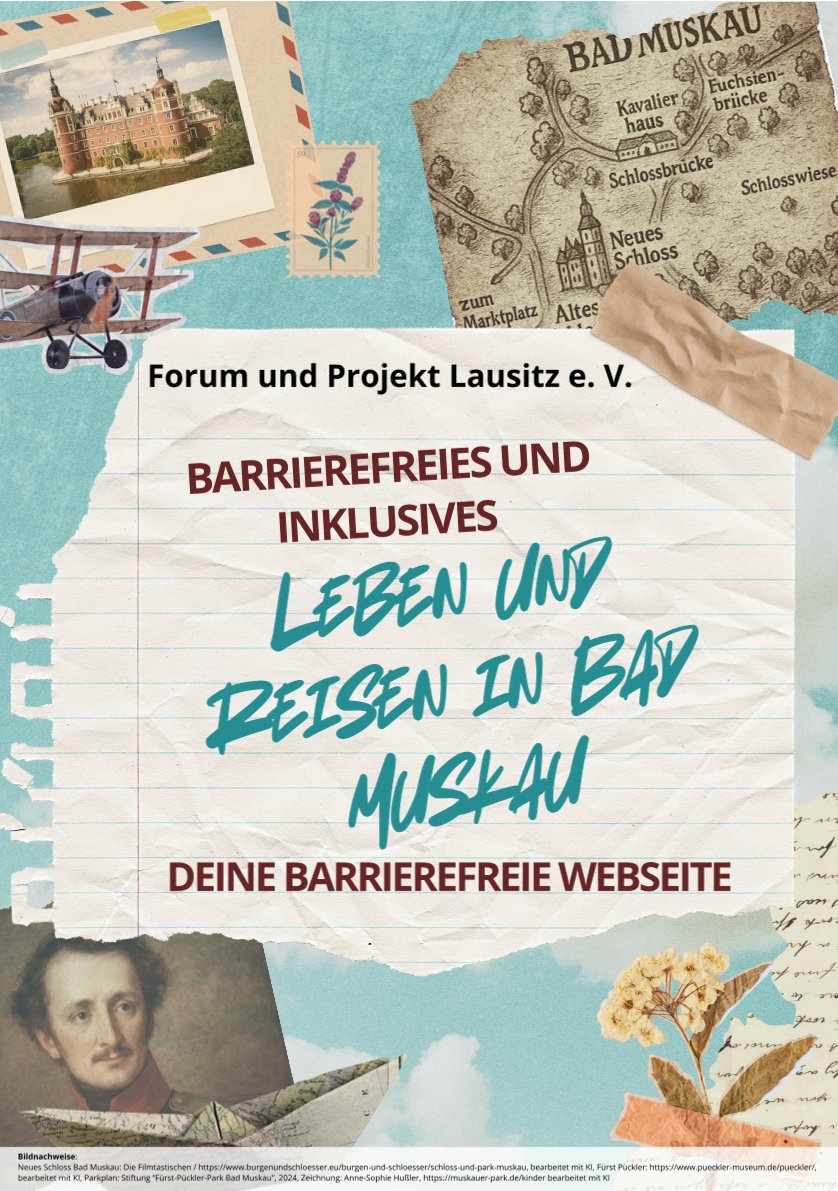
As a best practice, our community-based solution will be adapted in a small German town, in the Polish border town of Bad Muskau. This means that the database model we developed can now serve as an example for accessibility abroad as well!

We are excited to see how the association Forum und Projekt Lausitz e.V. will create a similar accessible database in a small town whose culture and size are completely different from Pécs. Their first plan is to hold peer-support training so the local community can understand what peer cooperation and counselling mean and why they are important in improving accessibility. We also talked about this at the project kick-off meeting held on 2. December 2025 in Bad Muskau, attended by members of the association and local participants.
As president of the People First Association, Veronika Pataki gave a short presentation about the association and our activities so far, followed by a more detailed introduction to the Barrier-free Pécs Database. The meeting will soon be followed by further training sessions with the German partners, in which the People First Association will again take on an important role, sharing the knowledge and experience we have gained over the years.
For us, this is not only huge professional recognition, but also proof that initiatives starting from local communities can create value on an international level.

It is significant for us that an initiative originating from a Hungarian city becomes an international model, making Pécs exemplary and well-known again. What we have been building together since 2018 now provides inspiration and practical support for others as well.
Do you know what would make us even happier?
If Hungarian cities also followed our example, and more and more Barrier-free City X Databases could be created. What do you say, are you in?
You can reach us here: patakiv@peoplefirst.hu

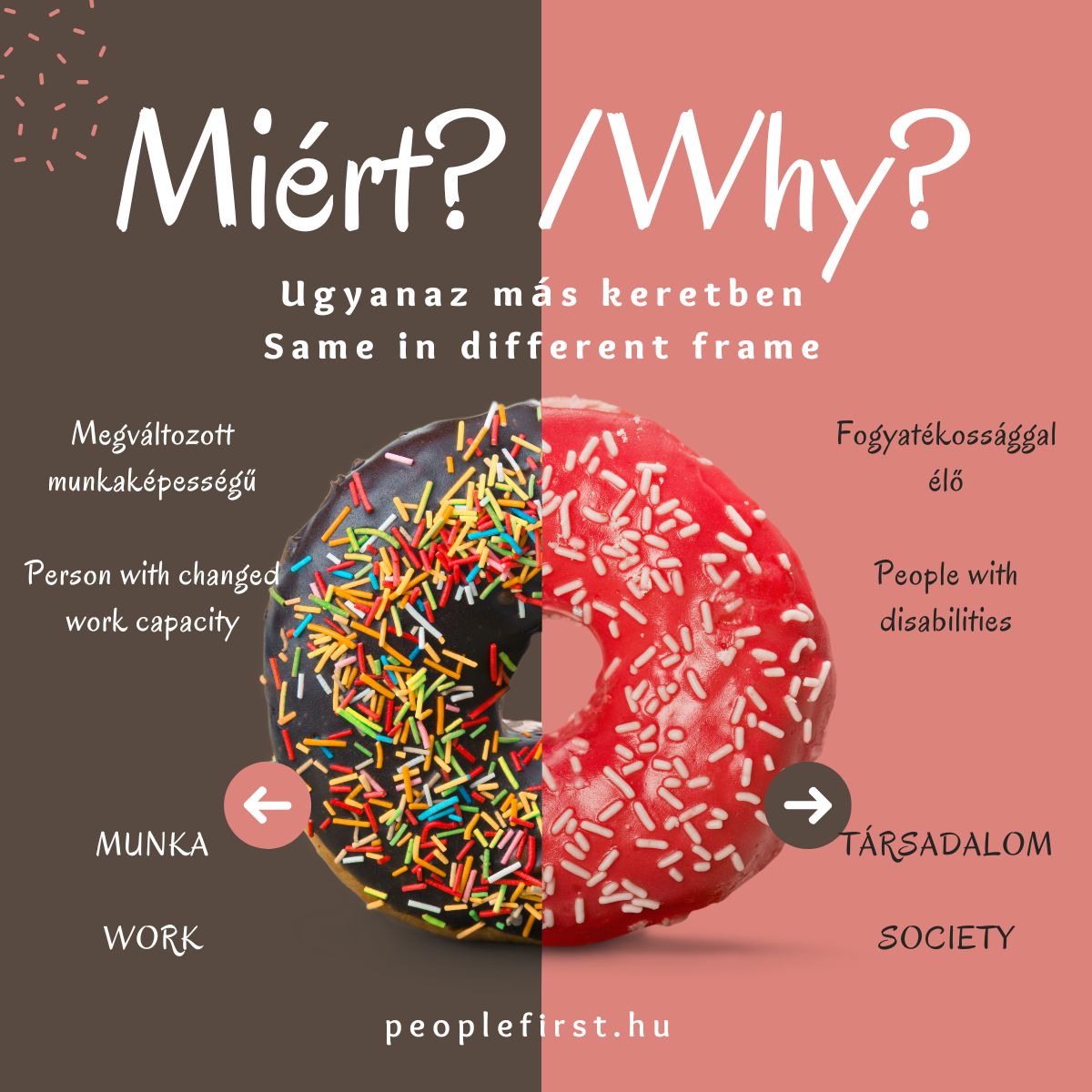
WHY Campaign 20: WHY the difference between people with disabilities and changed work capacity?

There is no difference. They are the same.
The terms “person with changed work capacity” and “person with a disability” are not synonyms, but concepts used in different contexts. The difference is not in the individuals themselves, but in the legal, social, or labormarket framework in which we talk about them.

Let’s look at what the two terms mean:
Person with a disability: a person who has a long-term physical, sensory, intellectual, or psychosocial condition that hinders participation in everyday life. This concept comes from a social and human rights perspective.

Person with changed work capacity: a legal and employment category that refers to individuals whose ability to work is permanently limited due to health impairment or disability. In other words, this concept is fundamentally tied to labormarket frameworks.

It is worth taking a little detour into how these rather twisted Hungarian expressions came into being. This brief historical overview clearly shows how language has also changed under the influence of societal attitudes.

Regarding the concept of disability, even in the 19th–20th centuries, common language and even medical terminology included the words crippled, stupid, lame, idiot, and invalid as fully accepted terms. These words originate from medieval Hungarian (except for “idiot,” which came to us from Greek and Latin) and were not considered offensive, they were simply descriptive labels. Today, “thanks” to societal attitudes, they have become strongly stigmatizing, as people started using them as insults.
What did language do in response? It moved forward. It invented the terms disabled, then person living with a disability, which we can now barely pronounce. The word “disabled,” for example, was accompanied by linguistic debates because it was originally a military term and was therefore considered unfortunate. “Person living with a disability” spread in Hungary under the influence of the UN Convention on the Rights of Persons with Disabilities. By 2025, even the Fundamental Law recognizes this as the correct usage (it is unknown whether the affected people were consulted).
Its advantage is that the language signals a societal shift: the emphasis is no longer on the “barrier,” but on human rights and social participation.

The term “changed work capacity” is the result of the mass disability pensions following the regime change. At that time, many people received disability pensions not only because of disability but also due to long-term illnesses. However, this category was too broad, which led to the 2011 reform and with it the term “person with changed work capacity.” Its goal is fundamentally commendable, as instead of disability pension and a kind of withdrawal, it promotes employment based on remaining, developable abilities. In practice however, it has been and still is heavily criticized, often justifiably. It is particularly confusing for HR professionals, as it is not straightforward, comes with administrative burdens, and many experience it as a stigma in the workplace. Another problematic regulation is that companies with more than 25 employees must employ at least 5% of their staff as people with changed work capacity. If they don’t, they must pay a rehabilitation contribution. The idea is good, as it creates opportunities. However, simply “filling the quota” does not fulfill its role, there is no real inclusion. It stigmatizes, creates administrative burden, and only fulfills a legal obligation. Companies often focus not on the abilities, but only on the existence of the category. Not to mention that the effect does not apply equally in all employment sectors.

Many HR professionals think that the two terms refer to two separate groups, whereas in reality, they describe the same people, just framed differently. This can also cause confusion in benefits, support programs, and legal documents.

Is there a solution to this conceptual confusion?
The solution is by no means introducing a third, fourth, or tenth complicated new term, but using the existing ones correctly and in the proper context.
“Person living with a disability” should be the basic, human-centered term. Meanwhile, “person with changed work capacity” should remain the legal-administrative category. This avoids confusion and strengthens societal awareness.

Better solutions exist for the mandatory quota for people with changed work capacity than the Hungarian one. Flexible support, barrier-free workplaces, HR training on the topic, and complex incentive systems are possible. In Italy for example, if companies cannot meet the mandatory quota, they receive state support for accessibility and workplace adaptation.

Written by Veronika Pataki

Understand, Support, Participate

“Should I include in my CV that I have a disability, or better not?”
“Does positive discrimination help me as a disabled employee in the workplace, or is it rather harmful?”
“As an HR professional, how should I phrase in a job advertisement if we are happy to hire people with disabilities, highlighting their expertise?”

In the past few days, we discussed these questions at the University of Pécs and at the Human Resources Development Committee of the Pécs-Baranya Chamber of Commerce and Industry, and more generally about the participation of people with disabilities in the primary labor market.
At the university, we met future HR students from abroad, and in the committee, we met HR professionals with substantial experience from large companies. We were able to learn completely different perspectives and exciting ideas regarding supporting the employment of people with disabilities! We also introduced these debate topics, and both groups responded in an inspiring and thought-provoking way.

Why is this topic exceptionally important?

WORK is currently the engine of our society. Without it, we must acknowledge that we cannot fully participate in the functioning and shaping of society. Work is needed in some form! That is the reality.

However, people with disabilities remain a disadvantaged group in the labor market. Even if they can find employment in the primary labor market, they have to perform more to receive the same recognition. They must face prejudices. They have to deal with unexpected problems. They must cope with accessibility issues. And all this causes stress, leading to burnout and depression.
Often, we may not even know that our colleague or employee has a disability, and therefore faces extra challenges.

All of this can be addressed by eliminating the information gap and breaking down prejudices.
Yes, it really is that simple. Let’s talk! Let’s understand how we can help ourselves as employees with disabilities, or how we can support our colleagues or employees.
Let’s not say, oh, I’d rather not hire someone with reduced work capacity because it will only cause problems. Instead, let’s understand the challenge, and solve it together.

This is where the People First Public Benefit Association’s workplace training helps, developed within the Soul Mate project with our international partners.
In 5 modules, with short videos, personal counseling, and firsthand experiences, we help you understand:
– how you can become an excellent employee as a person with a disability
– how you can support your colleague or employee if you see they are facing difficulties
– how to shed your prejudices and fears, and find outstanding employees or colleagues among people with disabilities

Contact us here: patakiv@peoplefirst.hu
Read more here: https://peoplefirst.hu/en/blog-post/soul-mate-erasmus-international-project/
Join our Facebook group discussing this topic: Fogyatékossággal a munkahelyen (People with Disabilities in the Workplace)

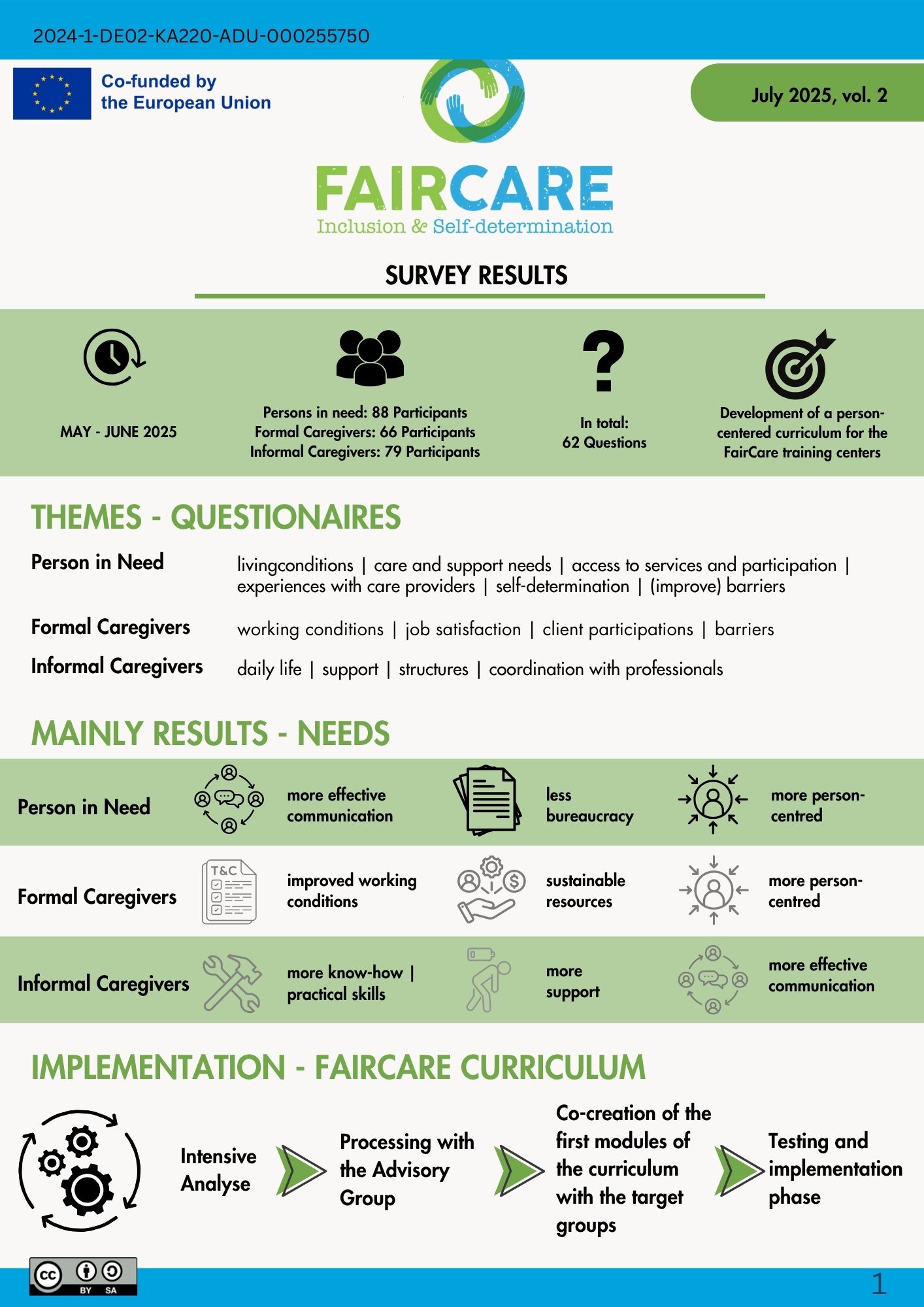
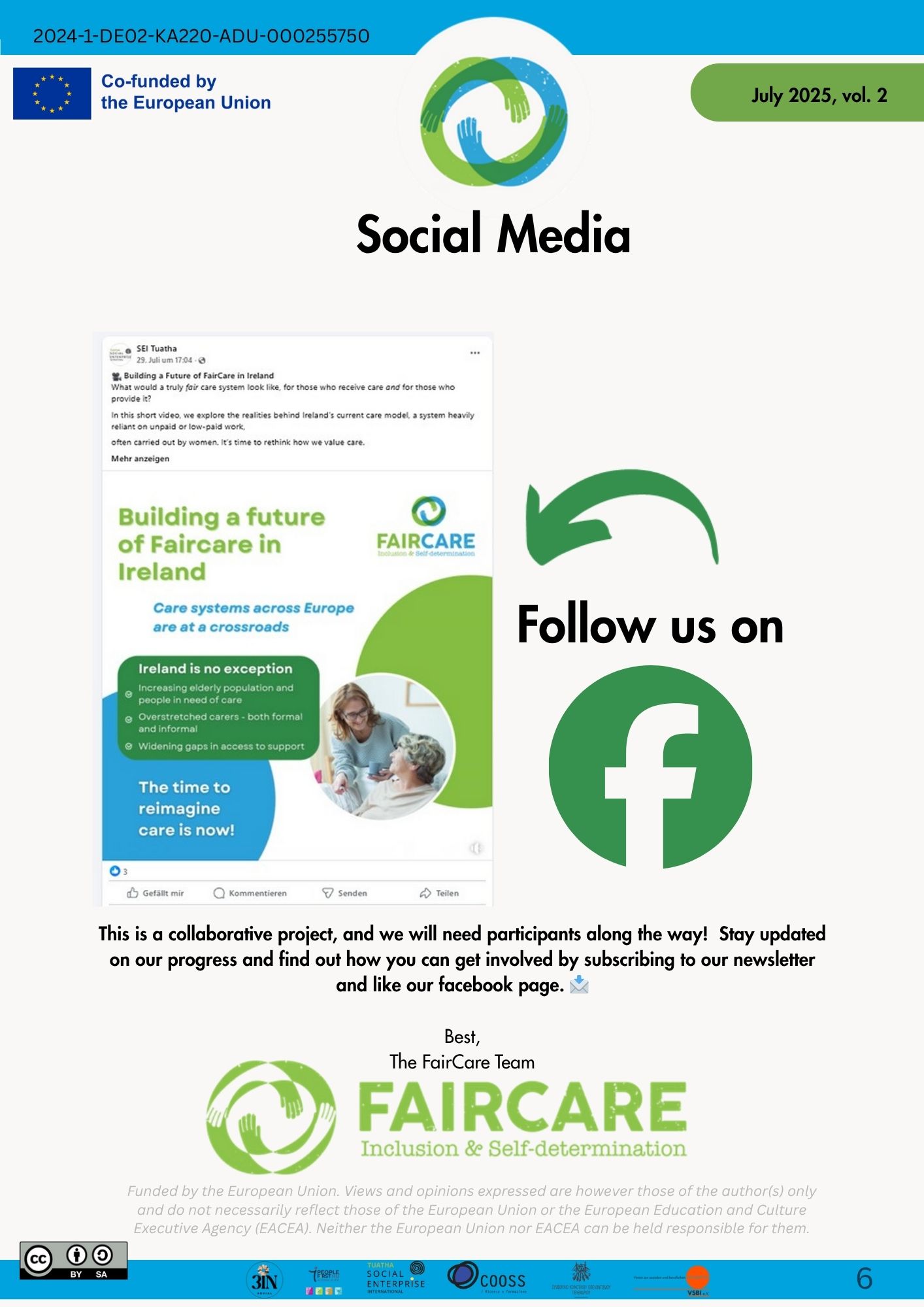
People in need of long-term care – survey results

In our FairCare international project, the target group sets the direction.
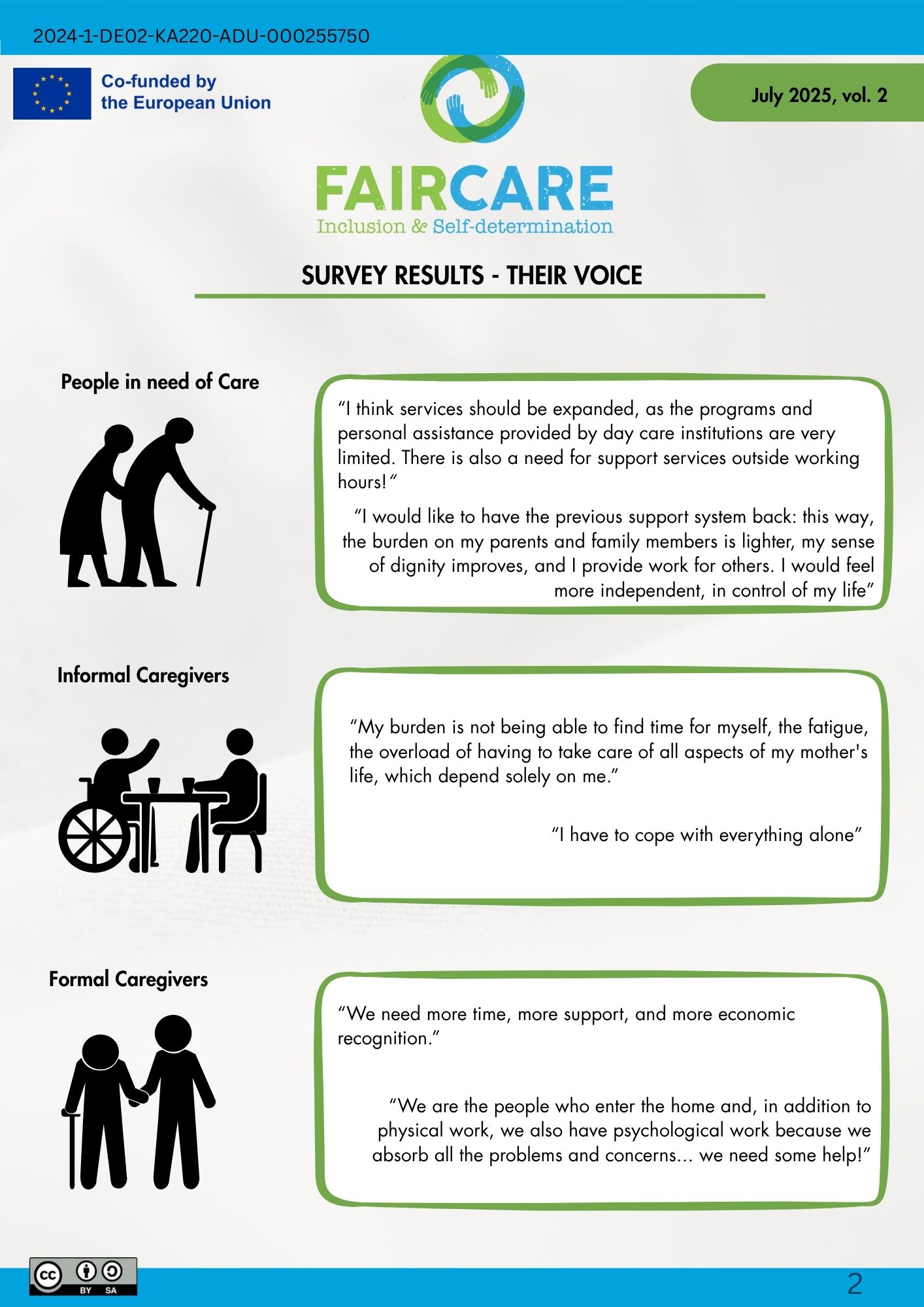
Following an intensive survey, the training materials for people in need of long-term care and their caregivers are being developed. A comprehensive questionnaire-based survey on the development of the training materials was carried out in all partner countries among the three target groups: people in need of care, family and friend caregivers, and professional caregivers/institutional staff.

The remarkable results are being published in our second Newsletter.
Please read through the newsletter and join us in our collaborative work.
Follow us
on Facebook:
https://www.facebook.com/groups/523950267376170
and
 https://www.facebook.com/PeopleFirstHun

Read more about the FairCare project here: https://peoplefirst.hu/en/blog-post/faircare-erasmus-international-project/

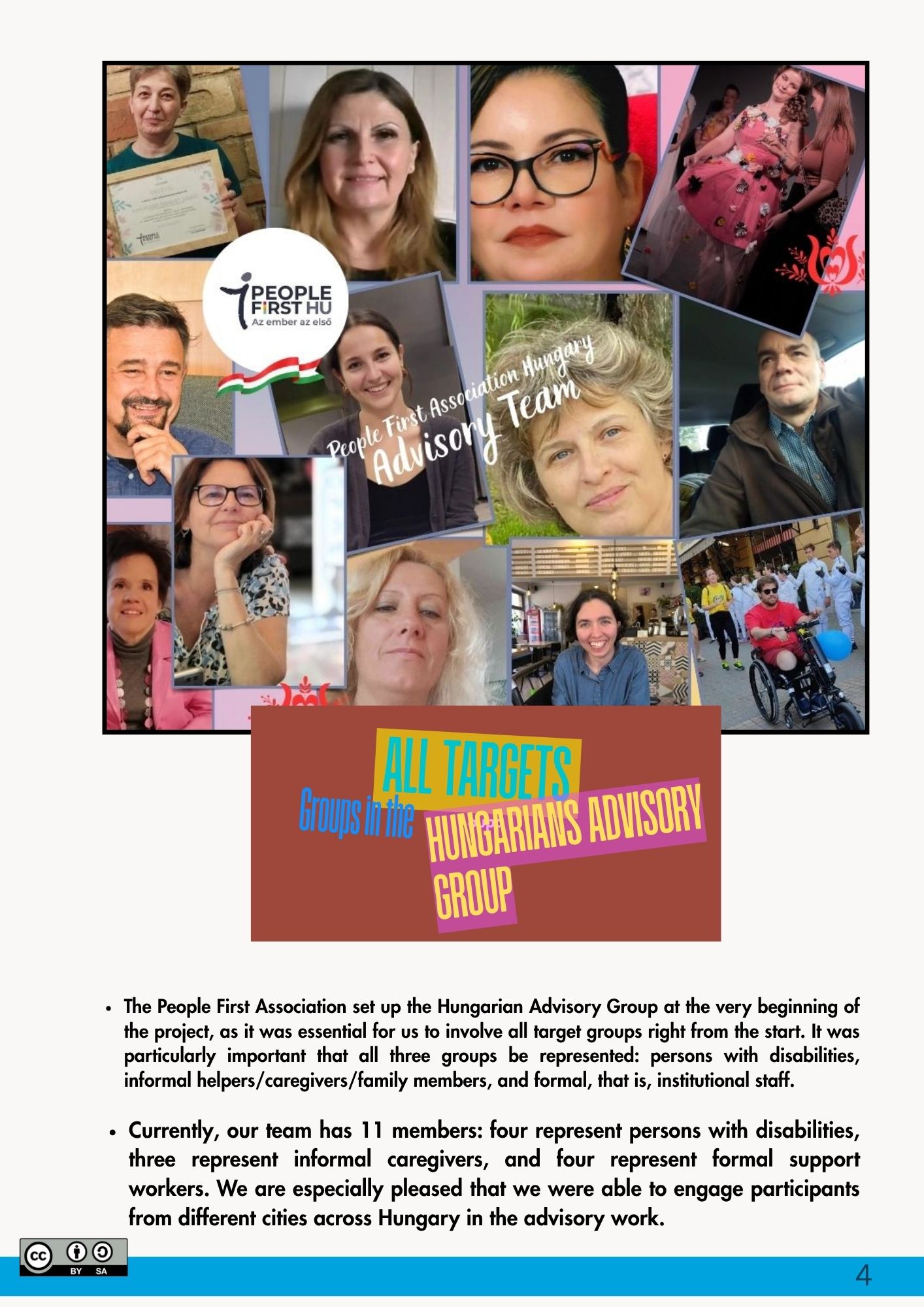
And become a member of our Advisory Group!

Click here to access the Newsletter in PDF format:
EN_FairCare Newsletter 2. pdf

Here you can browse it in image format:

Testing the banking accessibility material. Join now!

In our international projects, we are increasingly experiencing the realization of the slogan “Nothing about us without us!”

In our CODE project, which focuses on making banking services accessible and understandable for people with disabilities, the affected individuals have been involved from the very beginning.
Based on questionnaires, we mapped their needs regarding the topics of the learning material. And focus groups are testing the material that has already been developed based on this input, but is still awaiting finalization.

The learning material available on the online platform has also been tested by Hungarian participants, who enriched its development with extremely valuable suggestions.
The five modules of the material cover topics such as financial awareness, financial planning and saving, understanding financial products and services, consumer protection and fraud prevention, as well as achieving financial independence and accessibility.

It is important and innovative that the material is offered in different formats, so that everyone can find the learning method that suits them best: detailed textual content, concise summaries with visual elements on PowerPoint slides, and videos with audio narration.

We sincerely thank the current testers for their active participation, and especially for understanding that it is up to us to take action for our own causes!

JOIN US FOR THE NEXT LEARNING MATERIAL TESTING, where we will review, analyze, evaluate, and if necessary, improve the finished online learning platform together!
The next test is expected to take place in November.
We are already looking forward to your registration at patakiv@peoplefirst.hu

Let’s start thinking together, and broaden the circle.

Without work no one can lead an independent life – whether living with a disability or not. Work is the center, the measure, the essence of today’s society; through work we judge everything and everyone.
We would not even think how many employees with disabilities are already working today in the primary labour market. Yet we would not think either what extra burdens they must bear in order to create the same quality, the same value, and to work in balance themselves, just like their colleagues without disabilities. We do not talk about this, we do not know about it, we often just look sideways at our colleague, our subordinate, we generate prejudices, we invent for ourselves what might be with them – instead of asking.

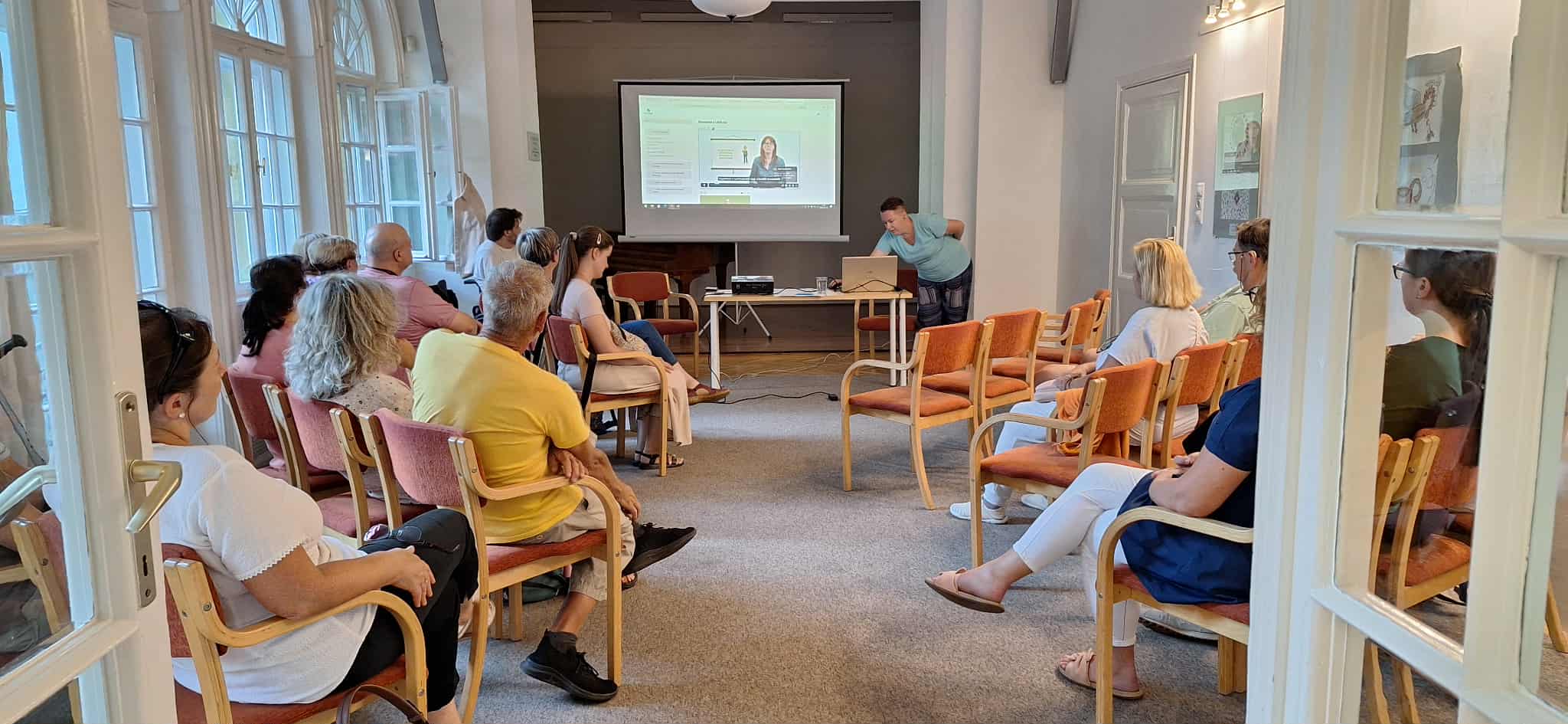
Generating conversations, breaking down preconceptions – this will be the continuation of our international Soul Mate project for our association! This international project dealing with this topic will close at the end of October 2025. Therefore now through several multiplier events we measured whether the results we have developed will be appropriate and usable. Both of our interactive workshops organized in September 2025 closed with unexpected results, which gave us new motivation and drive as well. Truly the topic is filling a gap, and here in Pécs there arose a very strong demand to continue, to talk about this, to broaden the circle.

The active and very committed participants of the workshops made it clear to us that as employers they would gladly employ people with disabilities (and rather than paying the prescribed penalty). For them it is obvious that disability should appear in the CV, they do not judge on that basis, but according to competences and skills.

It also became clear that there is a need for continuation, the participants want to carry forward this kind of cooperation.

They would like as soon as possible to apply the main result of the Soul Mate project, the 28 short video supports. These are about workplace problems presented by employees with disabilities and about their solutions. There was demand both for processing the videos together with us and for independent exploration.

From the Pécs-Baranya Chamber of Commerce and Industry we received an invitation to cooperate. A gate opens with this for companies and civil society organizations to get closer to each other, to broaden the circle, not only to be able to talk within our own bubble.

We believe in patient grassroots building, therefore we will generate similar conversations about the topic, and slowly involve more and more new participants. We need the municipality, the employment centre, the representatives of the press, and all those interested.

Employees with disabilities working in the primary labour market deserve respect and need support. Often minimal support, since most problems they are able to solve independently. Often a little attention. Or a few organizational ideas. Some mental support.

And what do we gain by employing employees with disabilities, by workplace acceptance of them? Valuable employees, often unexpected creativity, dedication, perseverance, commitment, and sensitivity.

We will continue, we will launch a circle for joint reflection. Join us too!
You can find us here: patakiv@peoplefirst.hu

Here stand some very deep, thought-provoking reflections among what was spoken by participants at our multiplier events:

“There are no foundations in the current society on which we can build social inclusion. The new generation, today’s young people in their twenties already think inclusively. Therefore, the most important thing is education in high schools, indeed even in primary schools and kindergartens.” 

“Small and medium-sized enterprises make up the bulk of employers, not the multinationals. We must reach them, involve them, but for years we have not been able to initiate dialogue with them, nor can we hold sensitization trainings with them. This is now a gateway, that a participant from the Chamber appeared.” 

“We are always talking in our own bubble. It is important to widen the circle of participants, for this topic to reach more and more people. Let’s begin a collective thinking process about how we can expand the circle.” 

“What counts as positive discrimination? Everyone sees it differently, it is completely individual what for one person is already harmful positive discrimination, for another is simply the promotion of an accessible environment. This is equally true for the employee with a disability and for the colleagues.” 

“For a long time I did not write into my CV what my situation was. A few years ago however, I decided to write at the very beginning of the CV that I am a person with a disability and I live with opportunities. Whichever employer still reads through my skills in the CV after that, and decides to invite me, employ me, there I can be sure to find an atmosphere where I can work.” 

“It is a sign of openness and honesty if I write into the CV that I am a person with a disability.” 

“As an employer it is clear to me that the selection is competence-based, therefore I take it naturally if the applicant writes into the CV that they are a person with a disability, I will not choose based on that.” 

“I know a Hungarian organization where they employ a manager responsible for well-being, who is specifically responsible for the workplace situation of people with disabilities. It can be a good example for others.” 

“It is important that we ourselves also do something to be accepted at a workplace. Let us not expect help from the outside, but let self-knowledge be the starting point, then follow self-empowerment.” 

“I was twice hired for a non-existent position, through connections. I had to figure out what my job should even be. This was positive discrimination, which I experienced as very strange.” 

“We must break down prejudices in people’s minds, and for this politics and decision-makers must also act.” 
WHY Campaign 19: WHY is there a sound signal at crosswalks? Who does it help and how?

A very interesting question. It can be answered in a single sentence, which goes like this: it helps blind and visually impaired people cross at crosswalks safely. In fact, the answer could end here, yet let us take a closer look.

Accessibility also on the street

Accessibility must not only be ensured inside buildings, but it is just as necessary in street traffic. One of the important elements of safe and independent street navigation for blind and visually impaired people is that where there are traffic lights at crosswalks, there should be some kind of audible signal.

In Hungary, since the 1980s we have been encountering traffic lights equipped with sound signaling devices. At first, they indicated the possibility of safe crossing with beeping, later with speech, and when the light turned green, the signal sounded continuously.
In the 2000s, devices appeared that could be activated by a remote control held by the visually impaired person. Thus, the traffic light only sounded when it was truly necessary. This solution is not only good for us visually impaired people, but also for city residents living near the lights, since a continuously sounding device can be disturbing in situations where no visually impaired person is crossing, yet the signal keeps making noise.

Although more and more places are installing talking lights that can be activated by remote control, due to public complaints, in many big cities the sound signal is turned off after 6:00 p.m., or in the better case after 10:00 p.m. However, this exposes us to increased danger of accidents during the lower traffic of evening or early morning, because the lights go silent. Where they are not switched off, it is still common that, upon residents’ request, they are turned down so much that in rush hour traffic noise, the sound of the lights is almost inaudible to us.

There also exist sound-signaling traffic lights that can be turned on with a button located on the pole. However, finding this pole is a serious challenge and inconvenience for us, and from a hygiene perspective it is not advantageous either.

Breakdowns of the lights are another difficulty, not only for us but also for the organizations representing our interests. In most places there is no well-established, widely known platform, email address, or phone number for reporting malfunctions, so it easily happens that sound signaling devices remain silent for a long time. Even after reporting, repairs often take weeks, or in worse cases, months. Fortunately, in several major Hungarian cities, including Pécs, the service http://jarokelo.hu/pecs is already in operation, specialized exactly in reporting and solving such problems.

What is directional hearing?

How does a visually impaired person distinguish, when there are two green signals at the same time, which sound belongs to which crosswalk?
To answer this question, it is worth thinking for a moment about what we pay attention to when we travel alone.

We, visually impaired people, besides relying on fixed reference points detectable with the white cane, also rely on our directional hearing. This means, for example, that if we are walking on a sidewalk directly next to the road, with the roadway on one side and a fence on the other, not only does the fixed fence provide security, but the sound of traffic also helps us.
When crossing at crosswalks, we mostly need to use our directional hearing, because it provides the most help in aligning ourselves correctly and then crossing safely. With its help, we can determine from which direction we hear the sound of the signaling traffic light, as well as the noise of traffic.

If the crosswalk is short, with less car traffic, and the sound signaling device is working properly (meaning it is audible from both sides of the crosswalk and not turned down too much), then both the starting and arrival side lights will be clearly heard at the same time.

If the crosswalk is too long, traffic too heavy, and the device not functioning properly, all these factors make safe crossing more difficult.

If there are two crosswalks next to each other and both show green at the same time, the usual practice is that the beeping lights sound at different pitches. In such cases, we must be able to clearly distinguish which beeping frequency is meant for us.
If both zebra crossing signal sounds come from the same direction, we should focus on the one that’s closer to us.

Some zebra crossing signals don’t just beep, they actually announce aloud which street we can cross.

Written by Evelin Almádi

Accessibility in South Korea: Progress, Challenges, and Changing Social Attitudes

This was written by Park Hyunjin and his daughter, a student at the University of Pécs. They are both volunteers with the People First Association for 2025–2026.

Transportation: Progress and Challenges 

Over the past 20 years, accessibility in South Korea has improved significantly, especially in public transportation.
In major cities like Seoul, most subway stations now have elevators and tactile paving, and city buses are equipped with wheelchair ramps.
An interesting feature is that bus apps display in real time whether a bus is wheelchair accessible, helping users plan their trips more easily. In addition, many local governments operate special “call taxis” for people with disabilities, offering more affordable and flexible transport options.
However, in smaller towns, older stations, and private buildings, accessibility is still limited, highlighting the gap between urban and rural areas. 

Accessible Tourism: Official Initiatives 

In recent years, South Korea has promoted “barrier-free tourism” as part of its official policy.
The Korea Tourism Organization and local governments, such as Seoul and Jeju, provide online guides and maps. In Seoul, the Danurim service offers detailed information on routes, accommodations, and even wheelchair rentals.
However, most guides still focus on major tourist destinations, while smaller towns or traditional sites often lack reliable information. Without a nationwide database, travelers with disabilities often rely on scattered sources or word of mouth.
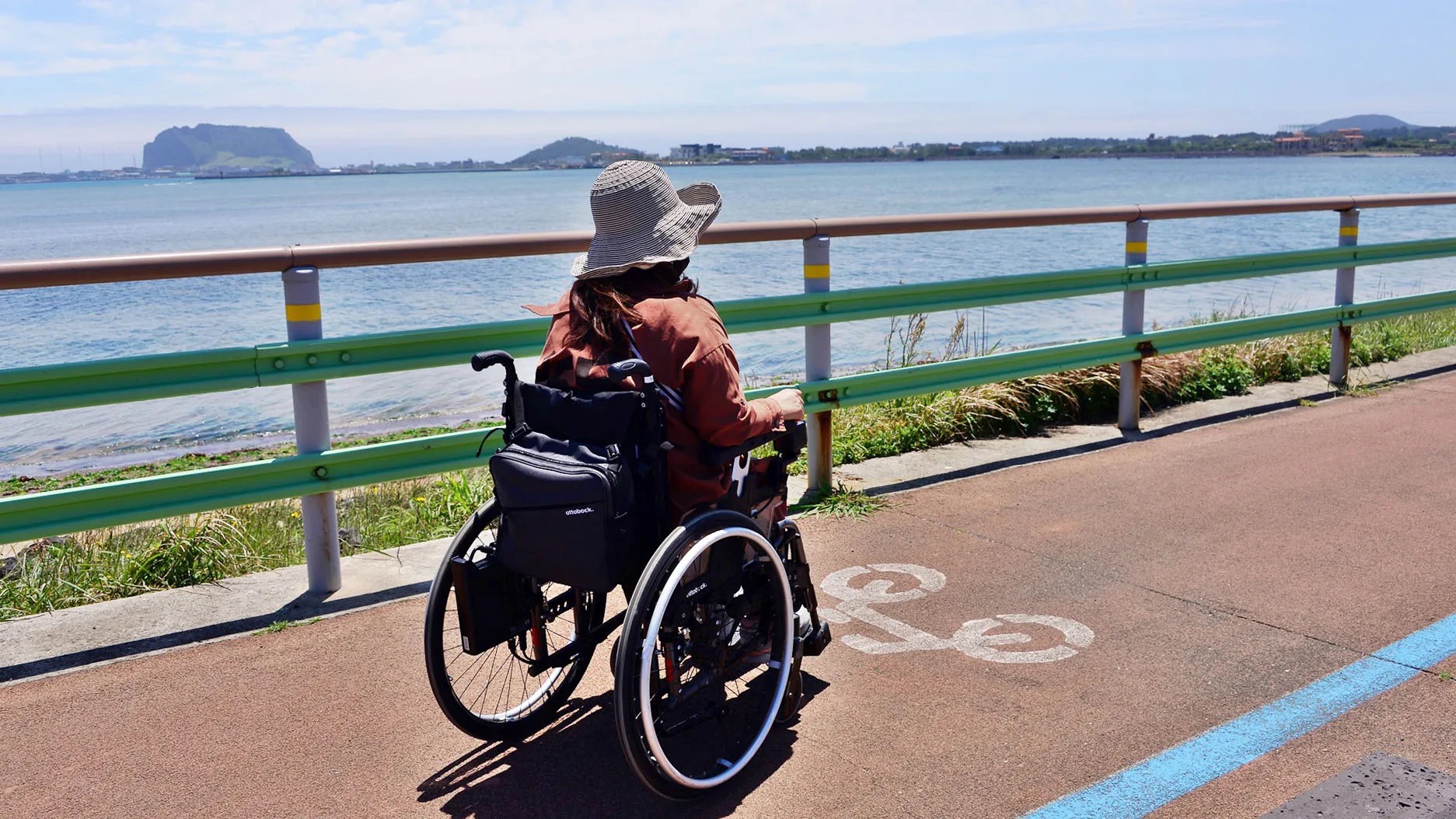
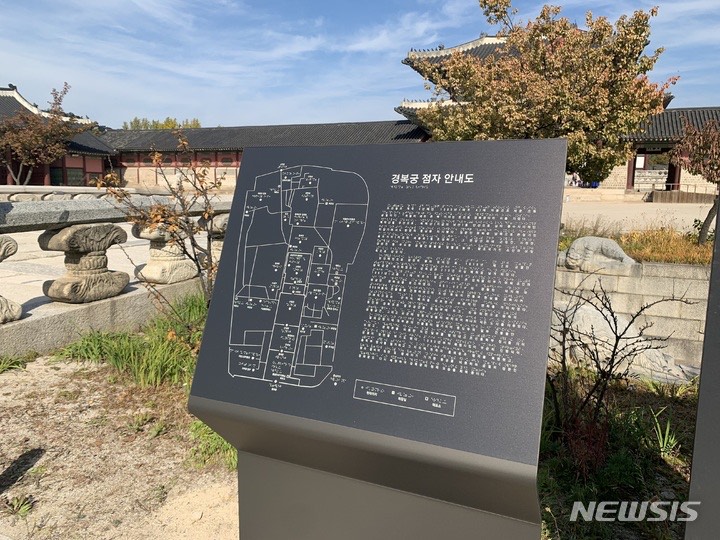
Still, improvements at places like Gyeongbokgung Palace and Jeju’s Olle trails—including ramps and accessible restrooms—show that accessibility is becoming a key part of Korea’s tourism strategy. 

Legislation and Support 

South Korea’s Disability Discrimination Act (2008) requires new public buildings to be barrier-free and sets employment quotas for companies.
Subsidies are available for assistive devices, and public transportation must provide low-floor buses and elevators. However, older infrastructure and many private facilities remain inaccessible, highlighting ongoing implementation challenges. 

Civil Organizations and Community Initiatives 

Civil society plays a crucial role in improving accessibility. Independent Living Centers (ILCs) in Korea support people with disabilities in areas such as housing, employment, and community life.
NGOs like Good Neighbors and advocacy groups also provide services and raise awareness. 

From my volunteer experience, I saw that small changes—like adding ramps or accessible restrooms—greatly increased participation in local events. These examples demonstrate the real impact of community efforts, even though many people with disabilities in Korea still rely primarily on family support. 

Digital Accessibility 

There is no nationwide database for accessible facilities. Some local governments and apps, such as Seoul Danurim or Wheelmap Korea, provide partial information, but major platforms like Naver Maps and Kakao Maps offer very limited accessibility data.
As a result, many people depend on online communities or word of mouth. 

Social Attitudes 

In recent years, Korean society has become more open toward disability, and social media and popular culture have played a key role in this shift.
On YouTube, creators like One Shot Hansol, a blind content creator, share everyday experiences, such as navigating buses and subways, vlogs from schools for the visually impaired, and conversations with other people with disabilities. His approachable and honest style helps viewers understand the real challenges of daily accessibility.
An example: https://www.youtube.com/watch?v=nK4a9f7_wwM

Inspiring Examples of Social Inclusion 

Big Ocean – South Korea’s First Deaf Idol Group:
Despite being deaf, they perform music and dance, and their world tours in Europe and the United States have inspired many people with their story of breaking barriers.
Take a look: https://www.youtube.com/watch?v=9aO2P5Tby-4

People with Disabilities in Mainstream Media:
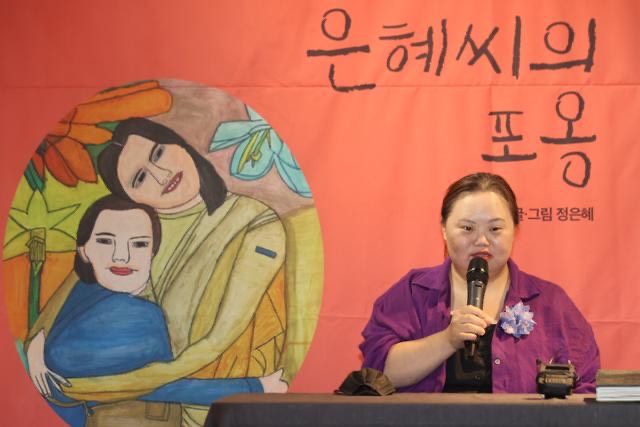
In the drama Our Blues (2022), Jung Eun Hye, an actress with Down syndrome and a painter, played Young Hee, the twin sister of a main character. Her warm and authentic performance was praised for bringing viewers closer to the everyday lives of people with disabilities, helping shift public perceptions in a positive way.
https://www.youtube.com/watch?v=AYRR91az76U

Together, these examples show that increased visibility in media and culture is gradually raising awareness and fostering acceptance, encouraging society to see people with disabilities not as separate, but as active and inspiring members of the community. 

Target Group determines what they want to learn

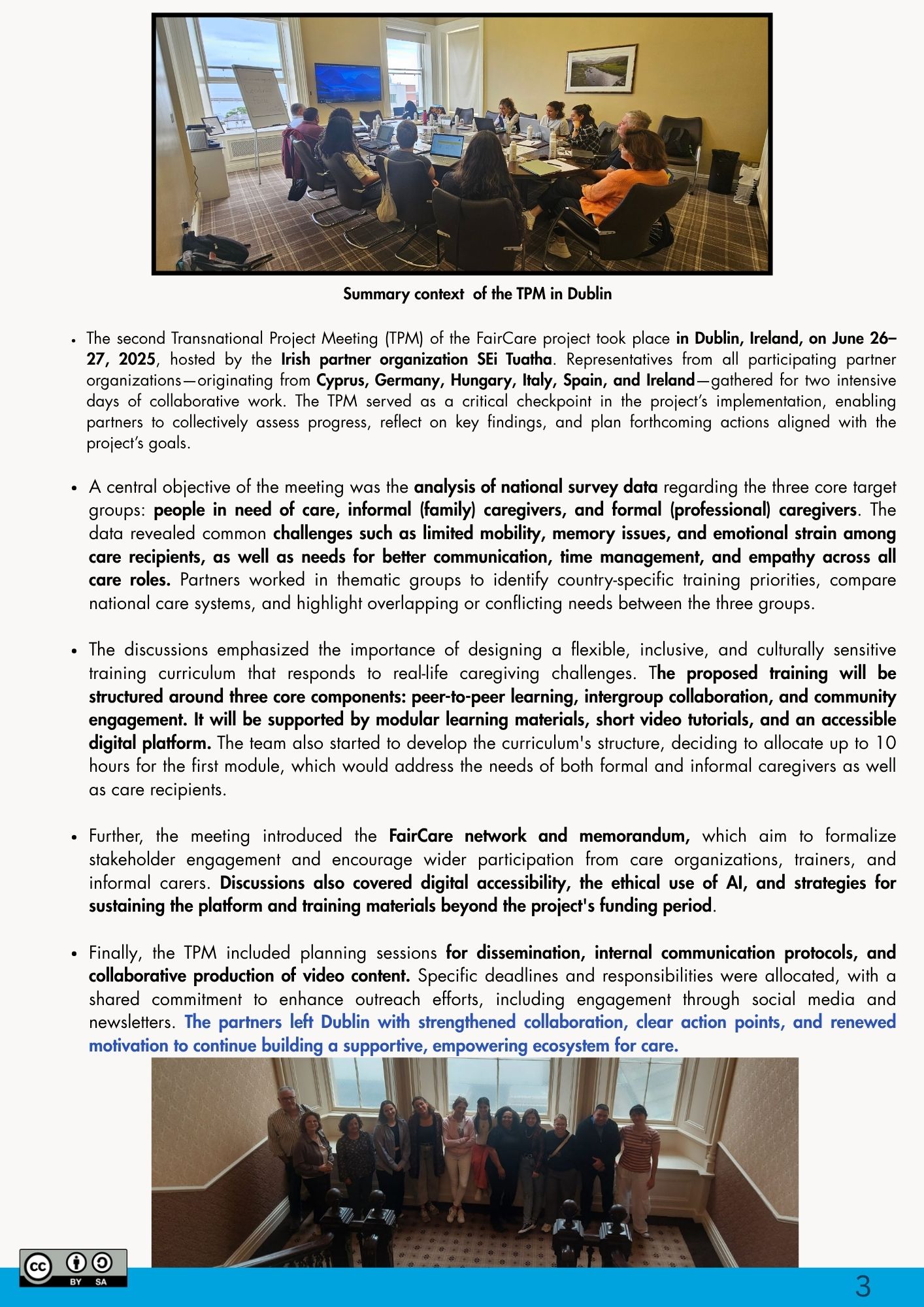
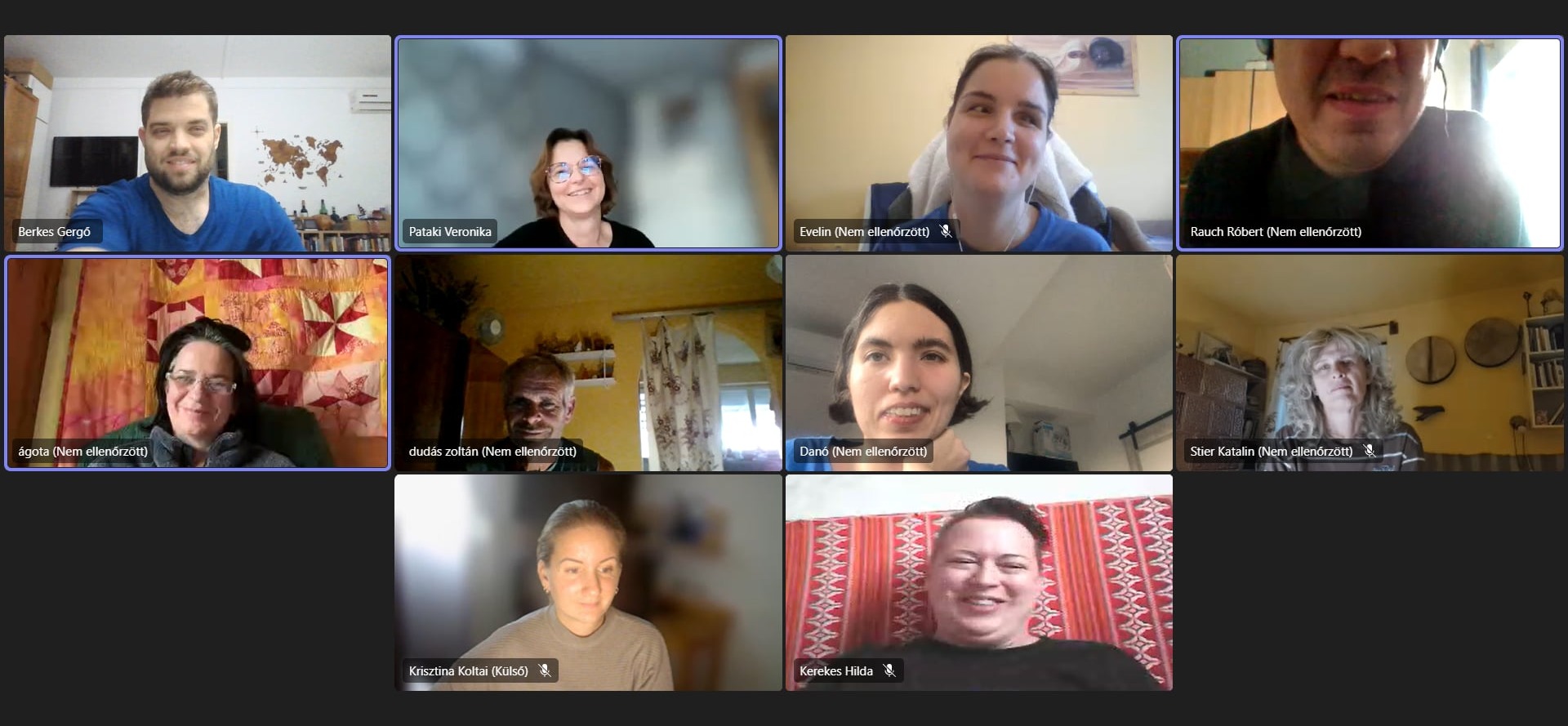
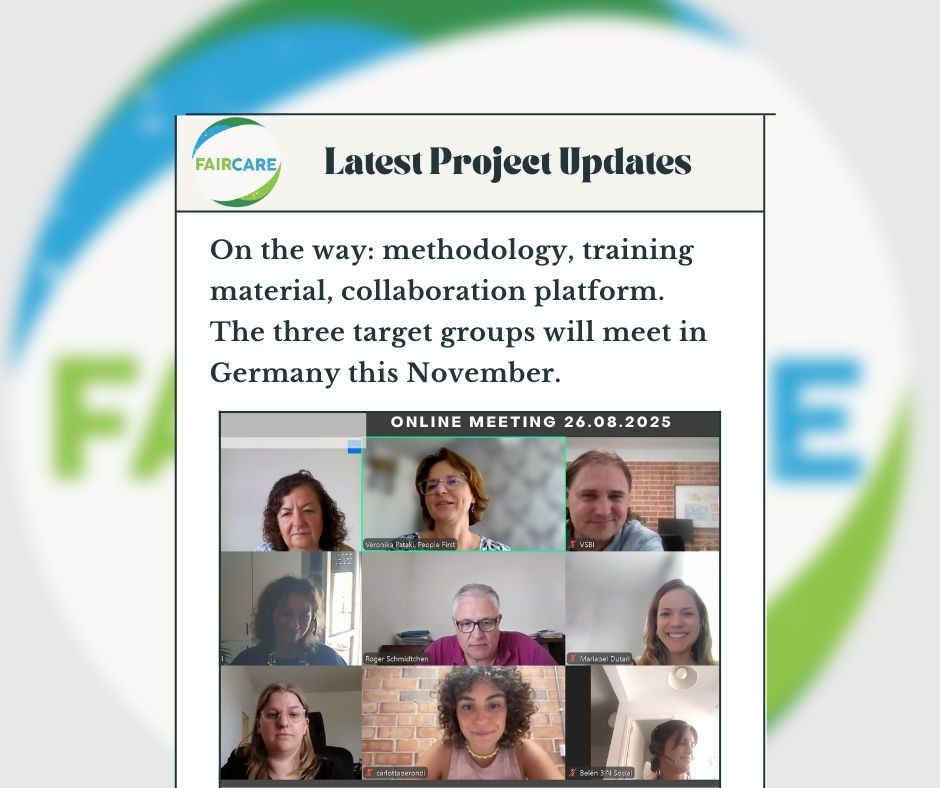
After the summer break, the FairCare international project team met online again.

But the work didn’t stop during the holidays!
The Methodology is almost complete, and we have defined the main direction for developing the collaboration tools.

The project partners have started developing the framework for the training materials together. From the very beginning, its development will involve close collaboration with the Advisory Teams in each country. In the coming weeks, the Advisory Teams – representing the project’s three target groups – will play a central role in deciding what knowledge is needed for each module, and together with the project partners, we will use this input to shape the initial framework. 

The full development of the training materials will take place in November during an in-person training week in Erfurt, Germany. Advisory Team members and project teams from all partner countries will come together for active, collaborative work to further shape the direction of the project. 

We’ll be sharing our second Newsletter with you soon – stay tuned!